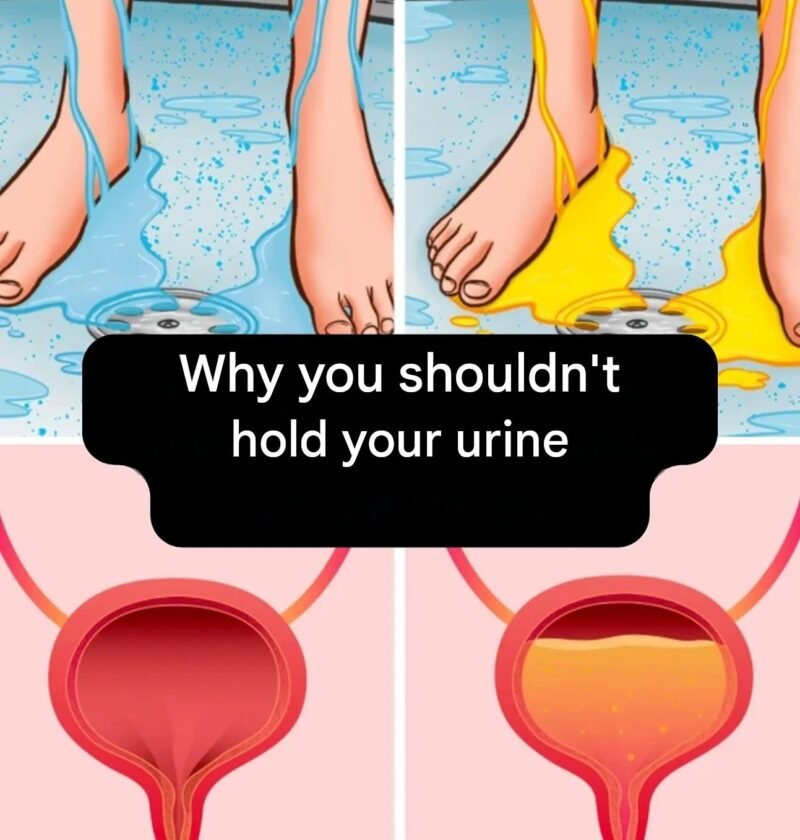
Holding your urine (a habit medical professionals call **urinary retention** or simply ignoring the urge) might seem harmless when you are busy, driving, or caught in a movie, but making a regular habit of it can take a toll on your urinary tract.
Here is why holding your urine is a bad idea, what happens to your body when you do it, and when it crosses the line from an annoyance into a medical emergency.
—
### What Happens to Your Body When You Hold It
Your bladder is essentially a muscular sac that stretches as it fills. When it contains about a cup to a cup-and-half of urine, stretch receptors send signals to your brain that it is time to go. If you consciously choose to override that signal, several things happen:
* **Increased Risk of Urinary Tract Infections (UTIs):** This is the most common consequence. Urine is a sterile waste product, but if it sits in the bladder for too long, it becomes a breeding ground for bacteria. Giving bacteria time to multiply increases the risk that they will travel up the urinary tract and cause an infection.
* **Bladder Muscle Weakness (Over Stretching):** If you routinely stretch your bladder past its comfortable capacity, the detrusor muscle (the muscle responsible for squeezing urine out) can eventually lose its elasticity and tone. Over time, this can lead to incomplete emptying, overflow incontinence, or a weakened stream.
* **Pelvic Floor Strain:** Your pelvic floor muscles work hard to keep the urinary sphincter closed while you hold back urine. Chronic straining can fatigue or tighten these muscles improperly.
* **Kidney Strain (In Severe Cases):** If the bladder becomes excessively full, urine can potentially back up toward the kidneys—a condition called reflux—which can lead to kidney infections or long-term renal damage.
—
### Acute Urinary Retention: A Medical Emergency
While holding your pee for an extra hour during a road trip is usually fine, chronically ignoring the urge or facing an obstruction (like an enlarged prostate) can lead to **acute urinary retention**.
This happens when the bladder muscle becomes so overstretched and fatigued that **you physically cannot urinate at all**, even though your bladder is painfully full. This is a medical emergency requiring an immediate trip to the emergency room for catheterization to relieve the pressure.
### The Bottom Line
Listen to your body! While life occasionally requires you to hold it for a short while, making a habit of emptying your bladder regularly (roughly every 3 to 4 hours during the day) helps keep your urinary tract healthy and prevents unnecessary strain.
Do you find yourself frequently having to hold your urine due to a busy schedule, or are you noticing any unusual symptoms like urgency or discomfort?