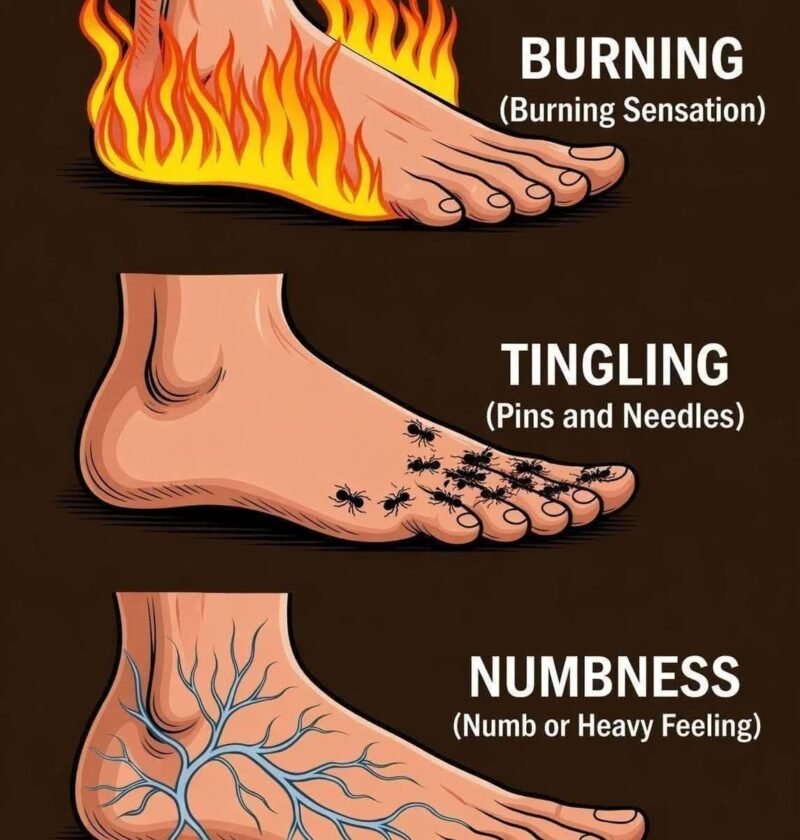
Experiencing a persistent combination of burning, numbness, and tingling in your feet can range from an uncomfortable annoyance to a sign of an underlying medical condition that requires attention. Because these sensations usually stem from your nervous system, understanding the potential root causes is the first step toward finding relief.
Common Causes of Burning, Numbness, and Tingling
-
Peripheral Neuropathy (Diabetic and Non-Diabetic): This is the most frequent culprit. It happens when peripheral nerves—usually starting in the longest nerves reaching down to the feet—become damaged. Chronically high blood sugar (diabetes) is a leading cause, but it can also be triggered by metabolic issues, autoimmune diseases, or toxins.
-
Vitamin Deficiencies: A lack of essential vitamins—particularly Vitamin B12, as well as other B vitamins like B1 or B6—can impair nerve function and lead to “pins and needles,” numbness, and a burning sensation, especially in the lower extremities.
-
Nerve Compression or Entrapment:
-
Tarsal Tunnel Syndrome: Compression of the posterior tibial nerve as it passes through the ankle can cause burning, pain, and tingling in the sole of the foot.
-
Sciatica: A pinched or irritated sciatic nerve in your lower back can send radiating tingling, numbness, or burning all the way down into your feet.
-
-
Circulatory Issues: Conditions like peripheral artery disease (PAD) reduce the flow of oxygen-rich blood to your extremities, which can starve the nerves and cause discomfort that often worsens at night.
-
Systemic Conditions: Underlying health concerns like an underactive thyroid (hypothyroidism) or chronic kidney disease can cause fluid imbalances and toxin buildups that affect nerve health.
-
Alcohol Use Disorder or Medications: Heavy alcohol consumption or certain prescription drugs (such as specific chemotherapy agents or long-term statins) can also list peripheral nerve irritation as a side effect.
When to Seek Medical Evaluation
Occasional tingling (like when your foot “falls asleep”) is normal, but you should schedule an appointment with your primary care physician or a neurologist if:
-
The burning, numbness, or tingling is persistent, worsening, or spreading upward into your legs.
-
It interferes with your sleep or your ability to walk comfortably.
-
You have known risk factors like diabetes.
-
You notice sudden muscle weakness or a loss of balance.
Are you experiencing these sensations constantly or only at certain times (like at night)? Knowing if you have any other health conditions, like diabetes or back issues, would also help me provide more tailored information.