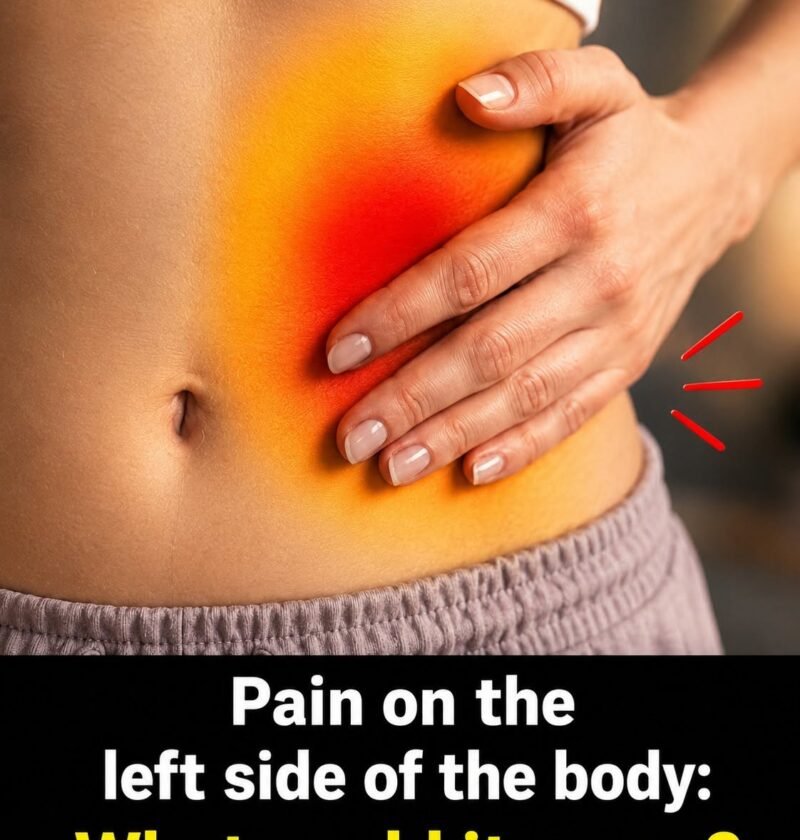
Pain on the left side of the body can mean many different things because the left side houses several critical organs—including your heart, left lung, spleen, pancreas, stomach, left kidney, and portions of your colon.
Because the source can range from harmless muscle tension to medical emergencies, understanding what the pain might signify and recognizing when to seek urgent care is essential.
Potential Causes Based on Location
1. Upper Left Chest or Torso
-
Musculoskeletal / Ribs: Muscle strains between the ribs (intercostal muscles), costochondritis (inflammation where the ribs meet the breastbone), or a bruised rib. Pain typically worsens with deep breaths, coughing, or twisting.
-
Heart-Related: Angina (reduced blood flow to the heart causing pressure or squeezing) or a heart attack.
-
Lung-Related: Pleurisy, pneumonia, or a pulmonary embolism (a blood clot in the lung, which is a medical emergency).
2. Upper Left Abdomen & Flank
-
Digestive / Gastric: Trapped gas, severe indigestion, gastritis, or a peptic ulcer.
-
Pancreas or Spleen: Pancreatitis (severe upper abdominal or back pain) or an enlarged/injured spleen (which sits just under the left rib cage).
-
Kidney: A left kidney stone or a urinary tract infection (UTI), which typically causes deep aching flank or back pain.
3. Lower Left Abdomen
-
Colon & Digestion: Constipation (stool buildup in the descending colon) or diverticulitis (inflammation of small pouches in the colon, which is a very common cause of lower left abdominal pain accompanied by tenderness and fever).
-
Gynecological (for those assigned female at birth): Ovarian cysts or, more critically, an ectopic pregnancy.
Red Flags: When Should You Pay Attention Immediately?
While a dull ache from a pulled muscle or gas usually resolves on its own, certain symptoms require immediate emergency medical evaluation (calling 911 or going to the nearest ER):
-
Chest Pain Symptoms: Pressure, tightness, squeezing, or crushing pain in the center or left chest that radiates to your jaw, neck, back, or left arm.
-
Associated Distress: Sudden shortness of breath, cold sweats, dizziness, lightheadedness, or sudden nausea alongside pain.
-
Severe Gastrointestinal Signs: Persistent vomiting, inability to keep fluids down, blood in your stool, vomit, or urine, or black, tar-like stools.
-
High Fever & Rigors: Severe lower left abdominal pain accompanied by a high fever, shaking chills, or a rigid, hard abdomen.
-
Trauma: Pain that begins immediately following a car accident, severe fall, or physical blow.
Medical Disclaimer: This information is for educational purposes and should not be used for self-diagnosis. If you are experiencing severe, worsening, or persistent pain on the left side of your body, always consult a healthcare professional immediately.
Are you or someone else currently experiencing left-sided pain, and are there any other symptoms accompanying it?