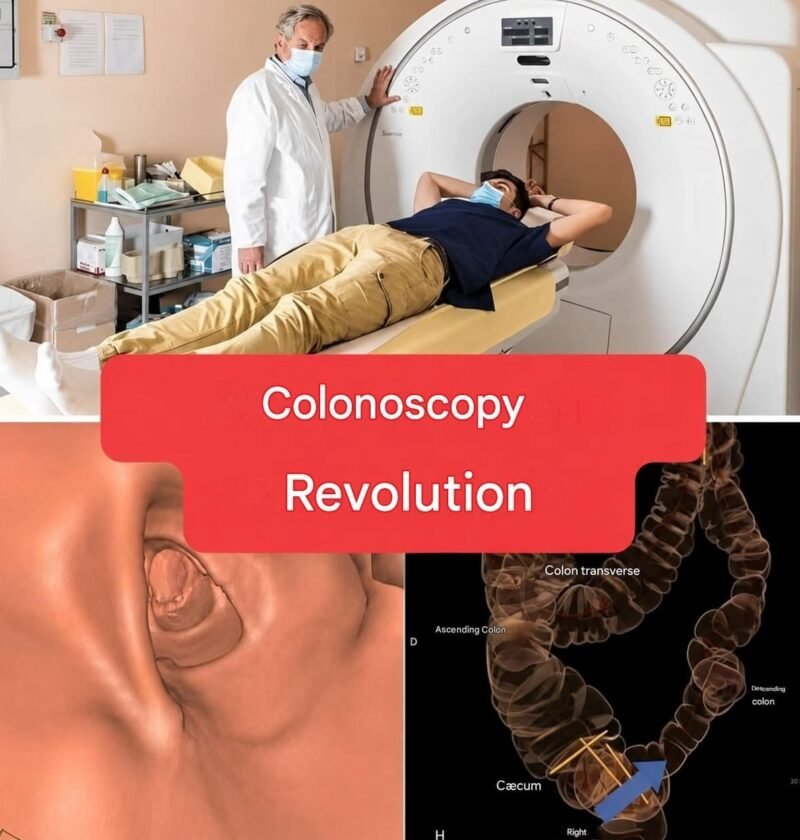
While exciting advancements in medical technology are making colorectal cancer screening much more accessible, the phrasing that “colonoscopy will no longer be an invasive examination” is a bit misleading.
A traditional optical colonoscopy inherently must remain an invasive procedure because its primary superpower is not just looking, but acting. However, the landscape of screening has expanded significantly, giving patients powerful non-invasive and minimally invasive alternatives.
What’s Changing: Alternatives to the Traditional Scope
Several modern testing methods allow doctors to screen for colorectal cancer or examine the bowel without a long, flexible tube and heavy sedation:
-
Blood-Based Liquid Biopsies: Newer blood tests can detect circulating tumor DNA or specific biomarkers associated with colorectal cancer. While they don’t replace a colonoscopy entirely, they offer an entirely non-invasive initial screening option.
-
Advanced Stool Tests (FIT-DNA / Stool RNA): Next-generation stool tests use advanced molecular and AI-driven analysis to look for blood and altered DNA or microbial patterns linked to precancerous growths.
-
Virtual Colonoscopy (CT Colonography): This uses low-dose computed tomography (CT) scans and specialized software to create detailed 3-D images of the colon. It avoids a camera scope and anesthesia, though it still requires a bowel prep.
Why a Traditional Colonoscopy Is Still Unique
Even with these incredible non-invasive screening tools, the traditional colonoscopy holds a distinct clinical role:
-
The Power to Treat: Non-invasive tests (like stool or blood tests, or a virtual colonoscopy) can detect warning signs or polyps, but they cannot remove them.
-
The Gold Standard: If a non-invasive test comes back positive, or if a virtual colonoscopy spots a suspicious polyp, the patient must still undergo a standard, invasive colonoscopy so the doctor can biopsy or remove the tissue right then and there.
Are you or a loved one exploring screening options and trying to decide between a traditional scope or a non-invasive alternative?