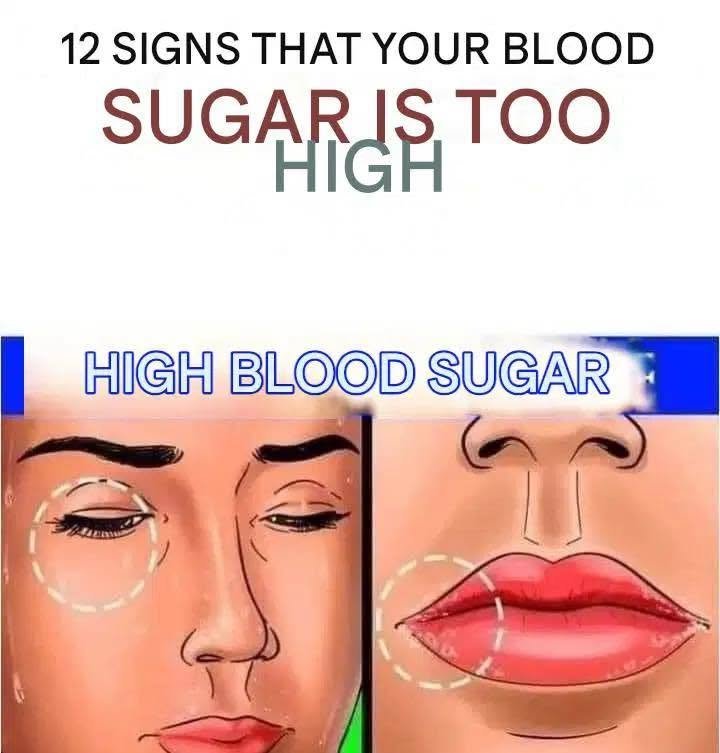
The High-Sugar Alert: Recognizing the 12 Key Symptoms Your Body Is Showing You
High blood sugar (hyperglycemia) can develop gradually, and your body may give you warning signs before you realize something is wrong. Recognizing these symptoms early can help you identify a possible problem and seek appropriate medical care.
The 12 key symptoms of high blood sugar
You feel unusually thirsty throughout the day, even after drinking water. High blood sugar can cause your body to lose more fluid through urination.
You may need to urinate more often than usual, including waking several times during the night.
You feel unusually tired, weak or drained, even after adequate sleep.
Fluctuating blood glucose can affect the fluid balance in your eyes, temporarily changing how clearly you see.
You may feel hungry soon after eating because your body may not be using glucose effectively.
Losing weight without trying can occur when the body cannot use glucose properly and begins breaking down fat and muscle for energy.
Persistent dryness in your mouth may result from dehydration associated with elevated blood glucose.
Dehydration and other skin changes can cause itching, although many other conditions can produce the same symptom.
Cuts, sores and other minor injuries may take longer to heal when blood sugar remains high.
Persistent high blood sugar over time can damage nerves, causing tingling, burning sensations or reduced feeling, especially in the feet.
Repeated skin, urinary tract or yeast infections may occur more often in people whose blood glucose is poorly controlled.
Significant hyperglycemia can cause nausea and abdominal pain. These symptoms may indicate a serious complication, particularly when accompanied by vomiting or rapid, deep breathing.
How can you tell if your blood sugar is high?
Symptoms alone cannot confirm high blood sugar. A blood glucose test is the best way to check.
-
Fasting blood glucose: 126 mg/dL (7.0 mmol/L) or higher is in the diabetes range.
-
Random blood glucose: 200 mg/dL (11.1 mmol/L) or higher, together with classic symptoms, can indicate diabetes.
-
HbA1c: 6.5% or higher is in the diabetes range and reflects average blood glucose over approximately 2–3 months.
In someone without unequivocal symptoms, diagnosis generally requires confirmation with repeat testing or another abnormal diagnostic test.
When should you seek medical help?
-
Vomiting or severe abdominal pain
-
Rapid, deep or difficult breathing
-
Fruity-smelling breath
-
Confusion, extreme drowsiness or fainting
These can be signs of diabetic ketoacidosis, a potentially life-threatening emergency that can sometimes be the first sign of diabetes.
What can you do to help manage high blood sugar?
-
Drink water regularly unless you have been advised to restrict fluids.
-
Choose balanced meals with vegetables, fiber-rich foods and appropriate portions of carbohydrates.
-
Limit sugary drinks and large amounts of added sugar.
-
Stay physically active if you feel well and exercise is safe for you.
-
Check your blood glucose and consult a healthcare professional if symptoms persist or readings are elevated.
Remember: Having one or more of these symptoms does not automatically mean you have diabetes. Some people with high blood sugar have no noticeable symptoms, so testing is important.
Would you like to learn about foods that help manage blood sugar or understand normal blood sugar levels?