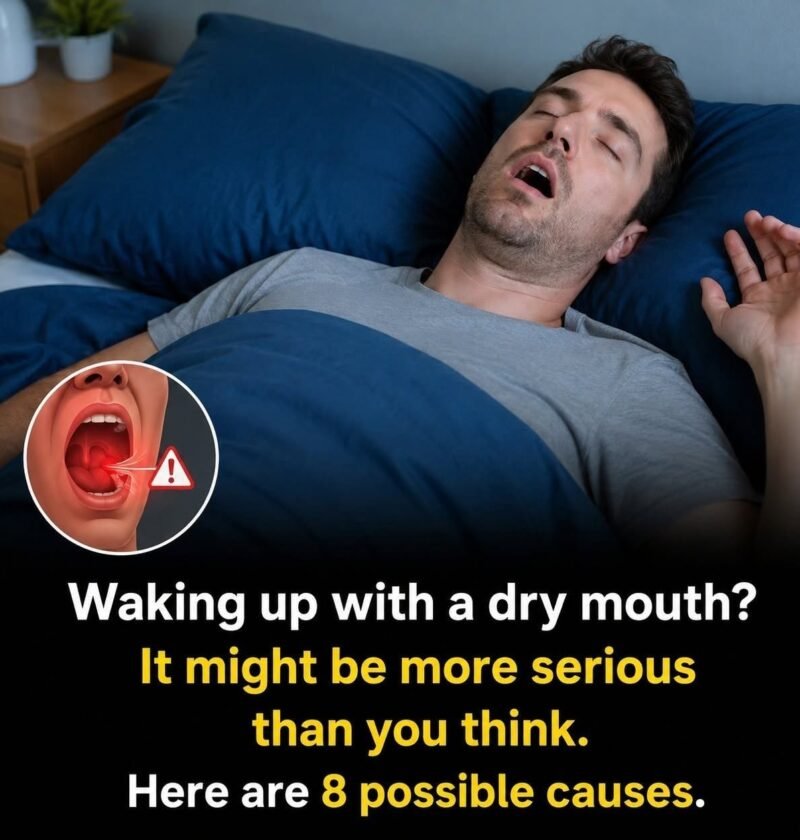
Waking up with an occasional dry mouth after sleeping in a warm room or sleeping with your mouth open is common. However, chronic dry mouth at night (medically known as xerostomia) is more than just an annoyance. Saliva naturally decreases during sleep, but when it drops too low or stops entirely, it removes a vital protective shield for your teeth, gums, and throat.
Ignoring persistent nighttime dryness can lead to rapid tooth decay, oral infections, and can even signal underlying systemic health conditions. Here are 8 warning signs associated with nighttime dry mouth that you shouldn’t ignore:
1. A “Cotton Mouth” or Thick, Sticky Saliva
If you frequently wake up feeling like your tongue is stuck to the roof of your mouth, or your saliva feels unusually ropey, thick, or stringy, your salivary glands are severely underperforming during the night. A healthy mouth should maintain a baseline of lubrication even after hours of sleep.
2. Persistent, Unusually Foul Morning Breath
Saliva acts as the mouth’s natural cleanser, washing away food particles, dead cells, and odor-causing bacteria. When your mouth dries out overnight, bacteria proliferate unchecked. If your “morning breath” is severe, foul, and doesn’t improve with basic oral hygiene, it is often a direct indicator of chronic overnight dryness.
3. Chronic Sore Throat and Hoarseness in the Morning
Nighttime dry mouth rarely affects just the oral cavity; it frequently extends into the throat. Waking up day after day with a scratchy, raw, or burning throat, coupled with a hoarse voice that takes hours to clear, suggests you may be breathing through your mouth all night (often due to nasal congestion, a deviated septum, or sleep apnea).
4. Cracked, Peeling Lips and Mouth Sores
Saliva helps keep the soft tissues of the lips and inner cheeks supple. Without it, the delicate skin of your lips can become chronically dry, chapped, and split at the corners (angular cheilitis). You may also notice an increase in painful canker sores or friction-related irritations because the lack of lubrication allows the cheeks and tongue to rub raw against your teeth.
5. Sudden or Unexplained Cavities and Tooth Decay
Saliva neutralizes acids produced by bacteria and provides essential minerals (like calcium and phosphate) that repair early enamel damage. Without this protective bath at night, your teeth are defenseless. If you experience a sudden spike in cavities, increased tooth sensitivity, or decay forming near the gumline where it normally wouldn’t, chronic dry mouth is very often the culprit.
6. Difficulty Swallowing, Chewing, or Speaking
While these symptoms are most noticeable during the day, a severe nighttime deficit in moisture can carry over into your waking hours. If you find yourself needing to constantly sip water just to swallow dry foods, if your tongue feels stiff, or if your speech feels slightly altered or “clunky” in the morning, your salivary flow is dangerously low.
7. Frequent Recurring Oral Infections (Like Thrush)
A dry environment is a breeding ground for fungi and opportunistic bacteria. If you frequently develop oral thrush (characterized by sore, creamy-white patches on your tongue, inner cheeks, or throat) or recurrent gum inflammation (gingivitis), it means the microbial ecosystem of your mouth is deeply unbalanced due to a lack of saliva.
8. The Urge to Drink Water All Night Long
Waking up multiple times a night with an intense, unquenchable thirst that forces you to keep a glass of water by your bed is a classic warning sign. While it can occasionally point to simple nighttime dehydration, persistent chronic thirst accompanied by dry mouth can be an early red flag for systemic conditions like type 2 diabetes or Sjögren’s syndrome (an autoimmune disorder that attacks moisture-producing glands).
What Could Be Causing It?
-
Mouth Breathing: Sleeping with your mouth open due to allergies, a sinus blockage, or a deviated septum causes saliva to rapidly evaporate.
-
Medications: Hundreds of common medications—including antihistamines, blood pressure drugs, antidepressants, and anxiety medications—list dry mouth as a primary side effect.
-
Obstructive Sleep Apnea (OSA): Severe snoring and sleep apnea frequently force mouth breathing and disrupt normal airway patterns, heavily drying out the throat and mouth.
-
Lifestyle Factors: Consuming alcohol, caffeine, or salty foods late in the evening, or using tobacco/vaping products, heavily depresses saliva production.
What You Should Do
If you notice these signs consistently, don’t just brush it off as a minor discomfort.
-
Consult your dentist: They can check for early signs of enamel erosion and recommend specialized high-fluoride toothpastes, alcohol-free moisturizing mouthwashes, or saliva substitutes.
-
Talk to your doctor: If lifestyle adjustments (like using a bedroom humidifier, staying hydrated, or trying nasal strips) don’t help, a physician should evaluate you to review your current medications, screen for sleep apnea, or test for underlying conditions like diabetes or autoimmune disorders.