Recognizing the signs of diabetes—especially those that sneak up while you are sleeping—is crucial for early detection and managing blood sugar levels. When blood glucose is too high or drops too low during the night, your body often sends warning signals.
Here are 5 common diabetes symptoms that typically become noticeable at night:
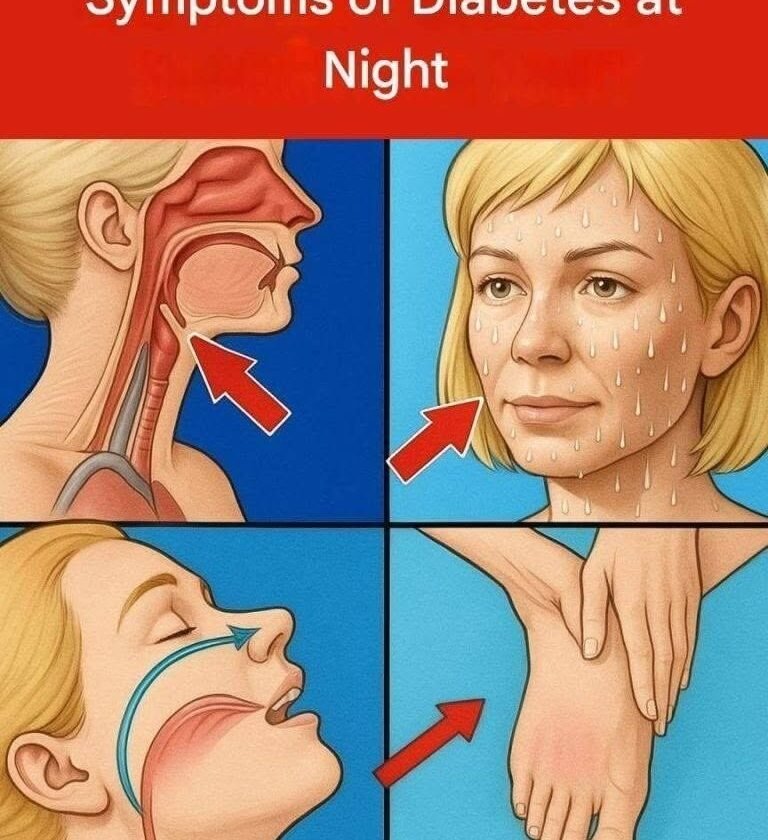
1. Frequent Urination (Nocturia)
-
What happens: Waking up multiple times during the night to use the bathroom is one of the most classic signs of high blood sugar (hyperglycemia).
-
Why it occurs: When excess glucose builds up in your bloodstream, your kidneys have to work overtime to filter and absorb the extra sugar. When they can’t keep up, the excess sugar spills into your urine, dragging fluids with it and leading to frequent, urgent trips to the restroom.
2. Excessive Thirst and Dry Mouth (Polydipsia)
-
What happens: Waking up parched with a very dry, sticky mouth or feeling an intense craving for water in the middle of the night.
-
Why it occurs: Because your body is losing extra fluids through frequent nighttime urination, it quickly becomes dehydrated. This triggers your brain’s thirst mechanism to prompt you to drink more fluids to restore balance.
3. Night Sweats and Hot Flashes
-
What happens: Waking up drenched in sweat or feeling unusually hot and clammy, even if your bedroom is at a comfortable temperature.
-
Why it occurs: Unstable blood sugar levels can disrupt your autonomic nervous system, which regulates body temperature and sweating. Additionally, nocturnal hypoglycemia (low blood sugar during sleep) can trigger a rush of stress hormones like adrenaline and cortisol, leading to sudden sweating.
4. Numbness, Tingling, or Burning in the Feet
-
What happens: Experiencing “pins and needles,” a burning sensation, or sharp, shooting pains in your feet and toes that often flare up or worsen once you are lying down in bed.
-
Why it occurs: Over time, high blood sugar can damage peripheral nerves (diabetic neuropathy). Because distractions are gone at night, nerve discomfort and abnormal sensations in the extremities tend to feel much more noticeable and intense.
5. Vivid Nightmares or Waking Up Exhausted
-
What happens: Waking up suddenly from vivid, disturbing dreams, or waking up feeling completely unrefreshed despite sleeping for a full 7 to 8 hours.
-
Why it occurs: This is frequently a byproduct of nocturnal hypoglycemia (low blood sugar). When blood glucose drops too low while you sleep, your body goes into a mini “fight-or-flight” response to release stored glucose, which can jolt you awake, trigger nightmares, disrupt deep sleep stages, and leave you feeling fatigued the next day.
Note: If you or a loved one are experiencing these symptoms regularly, it is important to consult a healthcare professional. A simple blood test (such as an A1C or fasting blood glucose test) can help determine if these signs are related to diabetes or another underlying health condition.
Would you like tips on how to monitor your nighttime blood sugar, or are you looking for guidance on general lifestyle changes to manage glucose levels?