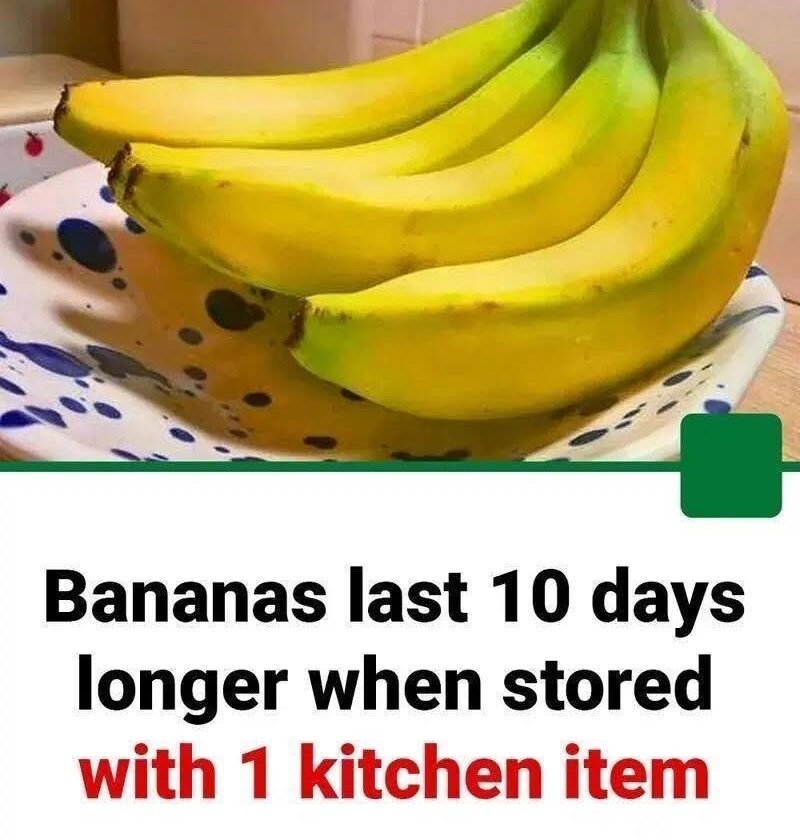
That kitchen item is aluminum foil (or plastic wrap) wrapped tightly around the banana stems.
Why Storing Bananas in a Fruit Bowl Backfires
Bananas emit high levels of ethylene gas—the natural plant hormone responsible for ripening fruit.
-
Most of this ethylene gas is produced and released directly from the stem (or crown) of the bunch.
-
When left exposed in a fruit bowl, ethylene gas concentrates around the bananas and neighboring produce, triggering rapid over-ripening, browning, and soft spots.
How to Do the Hack
-
Separate the Bunch (Optional, Best Results): Pull individual bananas apart from the main stalk. Separating them prevents trapped gas from affecting adjacent bananas.
-
Wrap the Stems: Tear off a small square of aluminum foil (or plastic wrap).
-
Seal Tightly: Wrap the foil firmly around the top stem of each individual banana (or around the top crown if keeping the bunch together).
Why It Works
-
Traps the Ethylene Gas: Wrapping the stem blocks the gas from escaping and circulating back over the rest of the banana flesh.
-
Slowing Down Moisture Loss: Sealing the stem reduces evaporation at the cut end of the stem, keeping the fruit firm for up to 7 to 10 additional days.
3 Bonus Tips for Extra Shelf Life
-
Keep Away from Other Produce: Apples, avocados, and tomatoes also release ethylene. Keep bananas isolated on the counter rather than in a shared bowl.
-
Use a Banana Hanger: Suspending bananas prevents pressure bruising, which accelerates browning where the fruit touches the counter surface.
-
Chill Once Ripe: Once bananas reach your desired level of ripeness, move them to the refrigerator. The peel will turn dark brown/black, but the fruit inside will remain firm and fresh for several extra days.