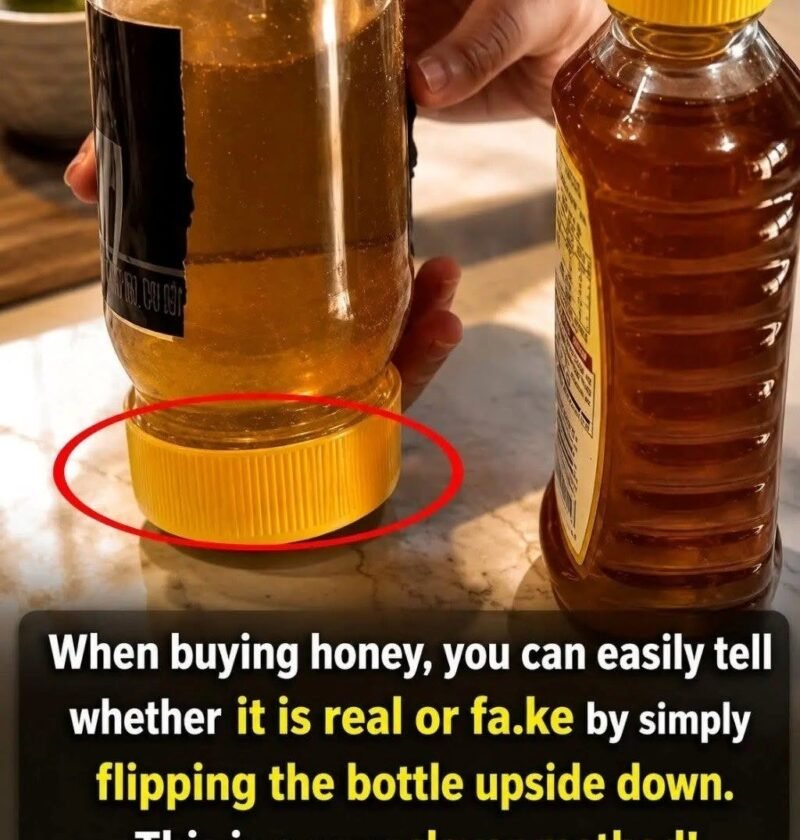
Many commercial honey products found on grocery store shelves are heavily filtered, pasteurized, or outright adulterated with cheap corn syrup, rice syrup, or cane sugar.
While food scientists note that popular kitchen “hacks” (like the water or flame test) aren’t 100% foolproof, looking at specific physical properties and label details can help you spot the real deal.
### 1. The Water Test (Density Check)
* **How to do it:** Drop a spoonful of honey into a glass of room-temperature water without stirring.
* **What to look for:** Pure, dense honey tends to sink straight to the bottom and hold its shape in a compact lump. Adulterated honey, which is often watered down or mixed with thin syrups, tends to dissolve and streak into the water quickly. *(Note: Honey is water-soluble given time or stirring, but raw honey resists immediate dissolving due to its high viscosity.)*
### 2. The Crystallization Check (Time Test)
* **How to look for it:** Over time or in cooler temperatures, **real, raw honey naturally crystallizes**, turning cloudy, grainy, or firm. This happens because of its natural glucose content.
* **The Red Flag:** If a jar of honey remains completely crystal-clear, liquid, and runny on your pantry shelf for months or years, it has likely been heavily processed, ultra-filtered, or blended with artificial syrups to prevent it from changing form. *(Exception: Certain floral varieties like acacia are naturally slower to crystallize, but most standard honey will eventually turn.)*
### 3. The Thumb Test (Viscosity)
* **How to do it:** Place a tiny drop of honey on your thumb.
* **What to look for:** Pure honey is thick and viscous; it will stay put or move very slowly. Fake or heavily diluted honey runs, drips, or spreads rapidly because the added liquid syrups disrupt its natural thickness.
### What to Look for on the Label
The most reliable way to ensure you are buying real honey isn’t a kitchen trick—it’s reading the fine print:
* **Look for “Raw” and “Unfiltered”:** Raw honey retains its natural pollen, enzymes, and antioxidants. Filtered commercial honey has had the pollen stripped out, making it much harder to trace its geographical and botanical origin.
* **Check the Ingredients List:** The ingredient list should contain only one thing: **100% pure honey**. If you see “corn syrup,” “glucose syrup,” or “high-fructose corn syrup” listed, it’s a blend.
* **Price Matters:** Authentic, ethical beekeeping requires labor and time. If a large jar of honey is suspiciously cheap, it is very likely diluted with commercial sweeteners.
Do you have a particular jar in your pantry right now that you’re trying to test?