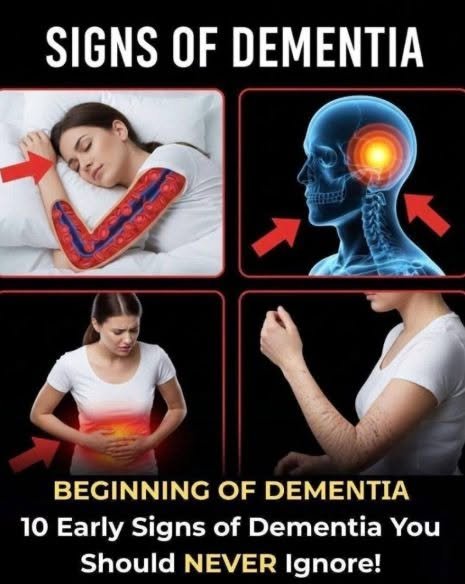
Recognizing the early warning signs of dementia can help ensure timely medical evaluation, diagnosis, and support. While the standard baseline often highlights 10 core indicators (outlined by organizations like the Alzheimer’s Association), expanded clinical lists commonly feature 12 key warning signs.
The 12 early warning signs of dementia include:
1. Memory Loss That Disrupts Daily Life
-
What it looks like: Forgetting recently learned information, important dates, or events, and increasingly relying on reminder notes or family members for things that used to be handled independently.
-
Typical aging: Occasionally forgetting names or appointments, but remembering them later.
2. Challenges in Planning or Solving Problems
-
What it looks like: Difficulty developing and following a plan, working with numbers, keeping track of monthly bills, or following a familiar recipe. Concentration often drops, and tasks take much longer.
-
Typical aging: Making occasional errors when balancing a checkbook.
3. Difficulty Completing Familiar Tasks
-
What it looks like: Struggling to drive to a familiar location, organize a grocery list, or remember the rules of a favorite game.
-
Typical aging: Occasionally needing help to use a microwave or record a TV show.
4. Confusion with Time or Place
-
What it looks like: Losing track of dates, seasons, and the passage of time. Individuals may forget where they are or how they got there, or get lost on their own street.
-
Typical aging: Briefly getting confused about the day of the week, but figuring it out shortly after.
5. Trouble with Visual Images and Spatial Relationships
-
What it looks like: Vision changes affecting balance, reading, or the ability to judge distance, color, and contrast (which can severely impact driving safety).
-
Typical aging: Vision changes strictly related to cataracts or normal age-related presbyopia.
6. New Problems with Words in Speaking or Writing
-
What it looks like: Stopping in the middle of a conversation with no idea how to continue, repeatedly struggling with vocabulary, or calling objects by the wrong names (e.g., calling a watch a “hand-clock”).
-
Typical aging: Occasionally having trouble finding the exact right word.
7. Misplacing Things and Losing the Ability to Retrace Steps
-
What it looks like: Putting items in unusual places (e.g., car keys in the refrigerator). Being unable to retrace steps to find them and sometimes accusing others of stealing.
-
Typical aging: Misplacing things from time to time (like glasses or a wallet) but successfully retracing steps to find them.
8. Decreased or Poor Judgment
-
What it looks like: Experiencing poor decision-making—such as dealing poorly with money, giving large amounts of money away to telemarketers, or showing significantly less attention to personal hygiene.
-
Typical aging: Making a bad decision or temporary mistake every once in a while.
9. Withdrawal from Work or Social Activities
-
What it looks like: Becoming passive and avoiding hobbies, social activities, work projects, or sports teams because it has become difficult to keep up or follow what is happening.
-
Typical aging: Feeling occasionally weary of work, family, and social obligations.
10. Repetitive Questions or Statements
-
What it looks like: Asking the same questions over and over, or repeating the exact same stories and statements within a short span because the recent conversation has already been forgotten.
-
Typical aging: Repeating a story occasionally out of excitement or habit.
11. Changes in Mood and Personality
-
What it looks like: Becoming unusually confused, suspicious, depressed, fearful, or anxious. Individuals may swing rapidly from calm to angry or tearful for no apparent reason, or act completely out of character.