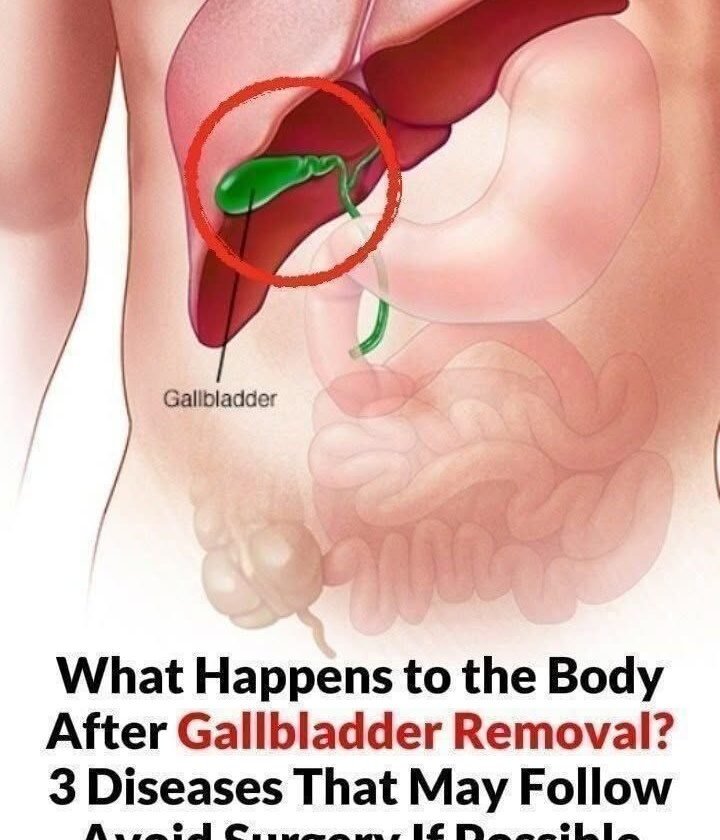
What actually happens after gallbladder removal?
The gallbladder stores bile produced by the liver. After it is removed, the liver continues producing bile, but bile flows more continuously into the intestine instead of being stored in the gallbladder. Most people can live normally without a gallbladder. NIDDK+1
Some people experience:
- Diarrhea or softer, more frequent stools, sometimes related to bile acids.
- Bloating, indigestion, nausea, or abdominal discomfort.
- Persistent symptoms sometimes called post-cholecystectomy syndrome. These symptoms may have another underlying cause and sometimes require further testing. nhs.uk+1
- Rare surgical complications such as bleeding, infection, bile leakage, bile-duct injury, or blood clots. nhs.uk+1
Should you avoid the surgery?
Not simply because of fear of these claims. If gallstones are causing repeated attacks or complications such as gallbladder inflammation, bile-duct blockage, or pancreatitis, doctors commonly recommend cholecystectomy because untreated gallstone complications can become serious. NIDDK+1
On the other hand, silent gallstones that aren’t causing symptoms generally don’t require treatment, so surgery isn’t automatically appropriate just because stones are found. NIDDK+1
If you tell me what the “3 diseases” are in the article/video, I can fact-check each one and explain whether gallbladder removal actually increases its risk.