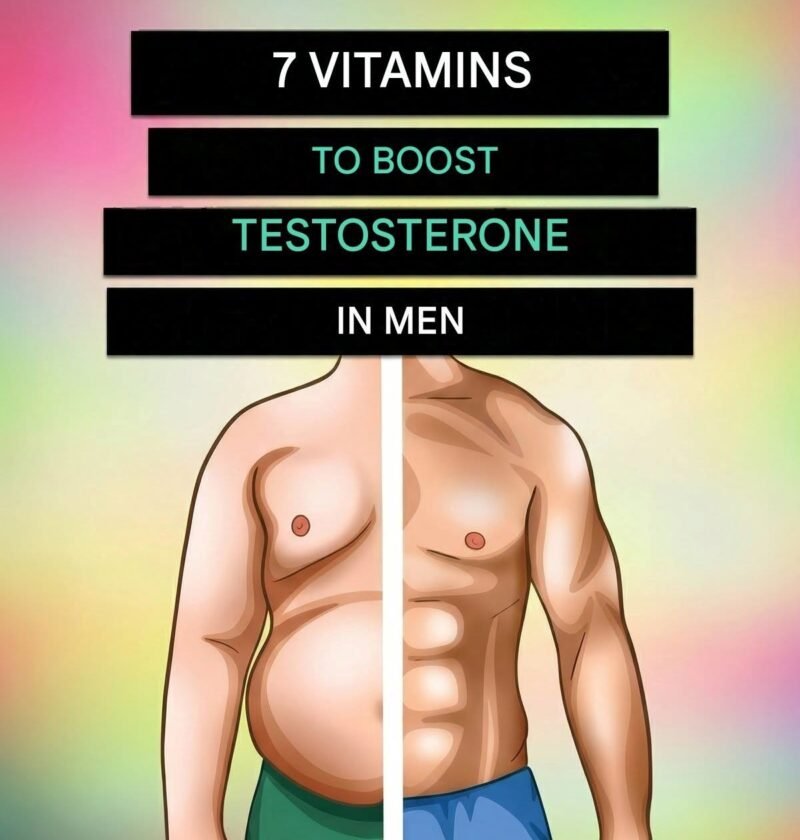
7 Nutrients That May Support Healthy Testosterone Levels
No vitamin or mineral is a guaranteed “testosterone booster.” However, correcting a genuine nutrient deficiency can help normal hormone production and overall health.
- Zinc — Important for reproductive and immune function. Severe zinc deficiency can impair testosterone production.
- Vitamin D — Low vitamin D is associated with lower testosterone in some studies, although supplementation doesn’t consistently raise testosterone in everyone.
- Magnesium — Involved in many biological processes, including normal muscle and hormone function.
- Vitamin B6 — Helps with protein metabolism and normal nervous-system function; it isn’t proven to dramatically increase testosterone when levels are already adequate.
- Selenium — Needed in small amounts for normal reproductive and thyroid function.
- Healthy dietary fats — Adequate intake of unsaturated fats is important for overall hormone health; extremely restrictive diets may be counterproductive.
- Protein — Sufficient protein supports muscle maintenance and overall metabolic health, although simply eating more protein doesn’t necessarily increase testosterone.
What matters more
Testosterone levels are also influenced by sleep, body weight, physical activity, alcohol intake, certain medications, and underlying medical conditions.
If you have symptoms such as reduced libido, erectile difficulties, loss of muscle mass, or persistent fatigue, don’t assume you need a supplement. A morning blood test and medical evaluation are more useful than testosterone “booster” products.
High-dose zinc, vitamin D, selenium, or other supplements can cause harm, so more isn’t better.