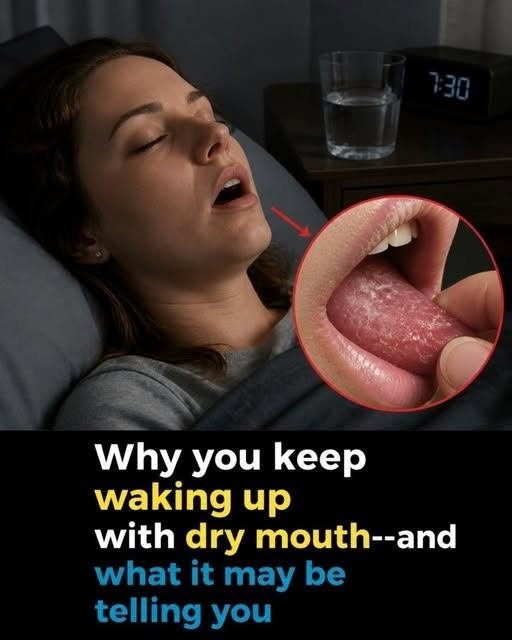
Waking up with a dry mouth is common and often has a simple explanation, but persistent nighttime dryness can sometimes point to an underlying problem.
What your body might be telling you
-
“I’m breathing through my mouth.”
A blocked nose, allergies, deviated septum, snoring, or sleeping with your mouth open can dry out the mouth. -
“I may be dehydrated.”
Not drinking enough during the day, sweating, fever, vomiting, or diarrhea can reduce saliva and leave you thirsty at night. -
“My medication may be reducing saliva.”
Many medicines—including some antihistamines, antidepressants, blood-pressure medicines, and diuretics—can cause dry mouth. -
“I might have sleep apnea.”
Loud snoring, nighttime gasping/choking, morning headaches, daytime sleepiness, and dry mouth can occur together. -
“My blood sugar may be high.”
Diabetes can cause increased thirst, frequent urination, and dry mouth. Persistent symptoms warrant medical testing rather than assuming dehydration. -
“Alcohol or tobacco may be irritating me.”
Both can contribute to reduced saliva and oral dryness. -
“I may have a salivary-gland or autoimmune problem.”
Persistent severe dryness—especially together with dry eyes—can occur with conditions such as Sjögren’s syndrome.
What you can do
Stay adequately hydrated during the day, avoid tobacco, limit alcohol, and consider a humidifier if the bedroom is very dry. Sugar-free gum or lozenges can stimulate saliva production.
Don’t ignore persistent dry mouth: saliva protects your teeth and gums, so chronic dryness increases the risk of cavities, gum disease, mouth infections, and difficulty swallowing.
If you also have loud snoring/gasping, excessive thirst and urination, unexplained weight loss, difficulty swallowing, or severe persistent dryness, speak with a doctor or dentist.