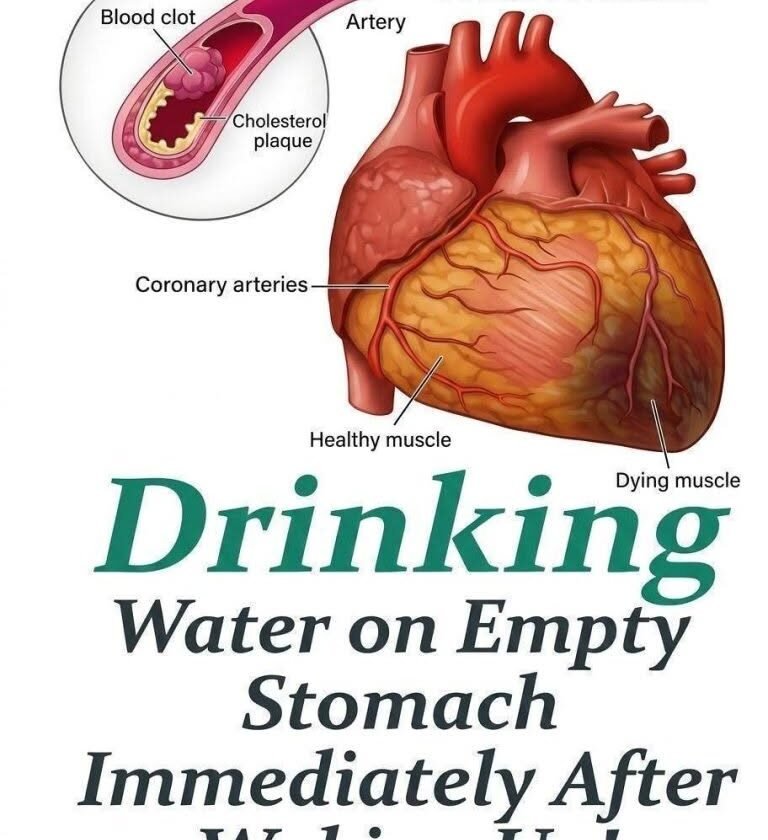
If you’re referring to the viral headline “Did you know that drinking water on an empty stomach could be…”, the missing ending is important—but the common claims that it “detoxes your body,” “flushes toxins,” or dramatically boosts metabolism are overstated.
What actually happens when you drink water before eating?
-
💧 It hydrates you. Your body absorbs water regardless of whether your stomach is empty.
-
🍽️ It may temporarily reduce appetite. Drinking water before a meal can make some people feel fuller, which may modestly reduce how much they eat.
-
🚽 It supports normal bowel function. Adequate fluid intake helps prevent dehydration and can help keep stools softer.
-
🩸 It doesn’t “clean your blood.” Your kidneys and liver continuously process and eliminate waste; drinking water doesn’t create a special detox effect.
-
🔥 It isn’t a fat-burning treatment. Water has essentially no calories, but drinking it on an empty stomach doesn’t specifically burn belly fat.
-
❤️ It can be part of healthy hydration habits. The important thing is your overall fluid intake, not whether you drink water before breakfast.
Is drinking water first thing in the morning dangerous?
For most healthy people, no. A normal glass or two is generally fine. You don’t need to force yourself to drink huge quantities immediately after waking.
People with certain heart, kidney, or liver conditions may have individualized fluid restrictions, so they should follow their clinician’s advice rather than generic hydration challenges.
Bottom line: Drinking water on an empty stomach is a perfectly reasonable habit if you enjoy it, but there’s nothing magical about the timing.
If you paste the rest of the viral headline after “could be…”, I can fact-check the specific claim it’s making.