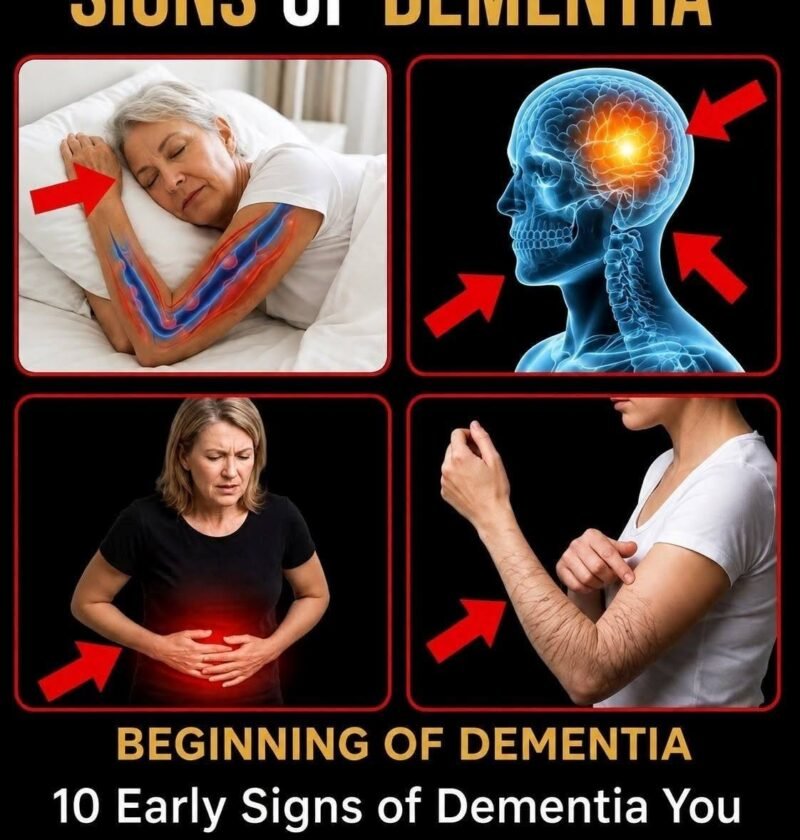
If you’re referring to the common headline “10 early signs of dementia you should never ignore,” the important point is that one occasional lapse doesn’t mean someone has dementia. Dementia involves a persistent decline in cognitive abilities that interferes with everyday life.
10 warning signs worth discussing with a doctor
-
Memory loss that disrupts daily life — repeatedly forgetting recently learned information, appointments, or conversations.
-
Difficulty planning or solving problems — trouble following a familiar recipe, managing bills, or completing routine tasks.
-
Difficulty with familiar tasks — struggling with things previously done routinely, such as navigating a familiar route.
-
Confusion about time or place — becoming lost or not knowing how they arrived somewhere.
-
Problems with visual or spatial information — difficulty judging distance, reading, or recognizing objects.
-
New problems with speaking or writing — difficulty finding common words or following a conversation.
-
Misplacing things in unusual ways — putting objects in inappropriate places and being unable to retrace one’s steps.
-
Reduced judgment — significant changes in decisions involving money, safety, or personal care.
-
Withdrawal from activities — losing interest in hobbies or social activities that were previously important.
-
Changes in personality or behavior — unusual anxiety, suspicion, irritability, apathy, or other persistent changes.
These signs can have other causes, including depression, medication effects, sleep problems, hearing or vision problems, thyroid disorders, vitamin deficiencies, infections, and other neurological conditions. A medical evaluation is therefore important rather than assuming dementia.
🚨 One important distinction
Sudden confusion developing over hours or days is not typical of ordinary dementia progression. It can be delirium, which may be caused by an infection, medication, dehydration, metabolic problem, stroke, or another acute illness and can require urgent medical attention.
If you tell me the person’s age and which symptoms you’ve noticed, I can explain which changes are commonly associated with normal aging versus those that warrant a medical evaluation.