If you’re turning this into a health post, I’d avoid telling people to avoid gallbladder surgery. Gallbladder removal (cholecystectomy) is a standard treatment for certain gallbladder problems, and whether surgery is appropriate depends on the diagnosis and symptoms.
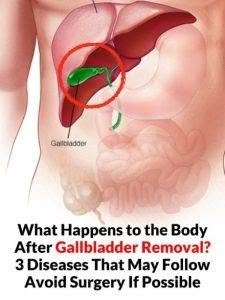
🩺 What Happens to Your Body After Gallbladder Removal? 3 Things You Should Know
The gallbladder stores bile made by the liver and releases it when you eat, particularly after fatty meals. After removal, your liver continues making bile, but bile flows more continuously into the intestine instead of being stored in the gallbladder.
Most people adjust well, but some experience digestive changes.
1. 💨 Diarrhea or looser stools
Some people develop diarrhea or more frequent bowel movements after surgery. This is often temporary, although it can persist in a minority of people.
2. 🍽️ Trouble tolerating fatty meals
Large or very fatty meals may cause bloating, cramping, or diarrhea. Smaller meals and gradually reintroducing higher-fat foods can help some people.
3. 🤢 Ongoing digestive symptoms
A small proportion of people continue to experience abdominal discomfort, indigestion, nausea, or other symptoms after surgery. These symptoms can have causes unrelated to the gallbladder and may require evaluation.
⚠️ Should you avoid gallbladder surgery?
Not simply because you’re concerned about these possible effects. For conditions such as symptomatic gallstones or acute inflammation of the gallbladder, surgery may prevent serious complications. The decision should be made with a qualified clinician based on your specific condition, risks, and alternatives.
After surgery, seek medical attention for severe or worsening abdominal pain, persistent vomiting, fever, jaundice, or significant swelling/redness around the incision.
Gallbladder removal changes how bile is stored—not whether your body can make bile or digest food.