Why Are Some Trees Painted White? The Surprising Reason Behind This Winter Tradition 🌳
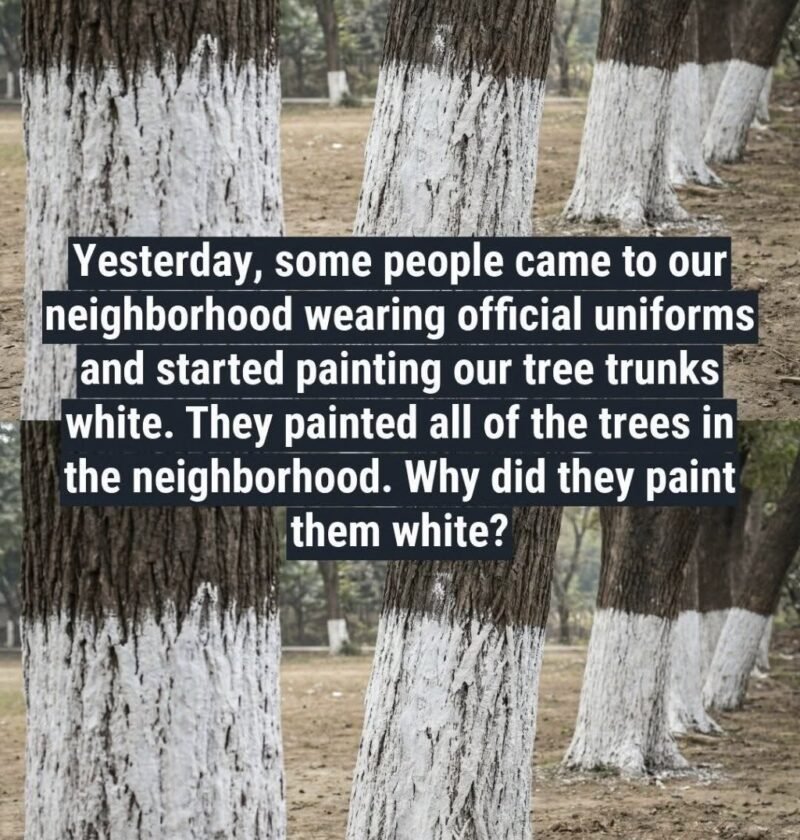
Have you ever noticed the lower trunks of trees painted white and wondered why?
It may look decorative, but in many places, whitewashing tree trunks has a practical purpose—particularly in orchards and areas with strong winter temperature changes.
☀️ 1. Protecting the Trunk From Sunscald
During winter, bright sunlight can warm the dark bark during the day. When temperatures drop rapidly after sunset, the bark can cool and contract quickly.
This repeated temperature change can contribute to sunscald and cracks, particularly on young or thin-barked trees.
White paint reflects more sunlight, helping keep the trunk cooler and reducing extreme temperature fluctuations.
🐛 2. It May Help With Some Pests
Traditional lime-based whitewash has sometimes been used as part of orchard pest management. It may discourage or interfere with certain insects and organisms on the trunk.
However, white paint isn’t a universal insecticide and shouldn’t be relied upon to eliminate an infestation.
🍄 3. Traditional Lime Wash Has Other Uses
Historically, gardeners and farmers have used lime-based washes on tree trunks. These are different from simply applying ordinary household white paint.
Modern recommendations vary depending on the tree species, climate, and local gardening practices.
🌱 4. Why Are Young Trees Often Treated?
Young trees can have relatively thin bark and may be more vulnerable to temperature-related damage. Protecting the trunk can therefore be particularly useful in some climates.
⚠️ Don’t Paint Trees With Just Any Product
If you’re considering whitewashing a tree, don’t automatically use leftover household paint. Products and methods that are appropriate for trees depend on local conditions and the species.
In some situations, wrapping the trunk with an appropriate tree guard or using another recommended protective method may be preferable.