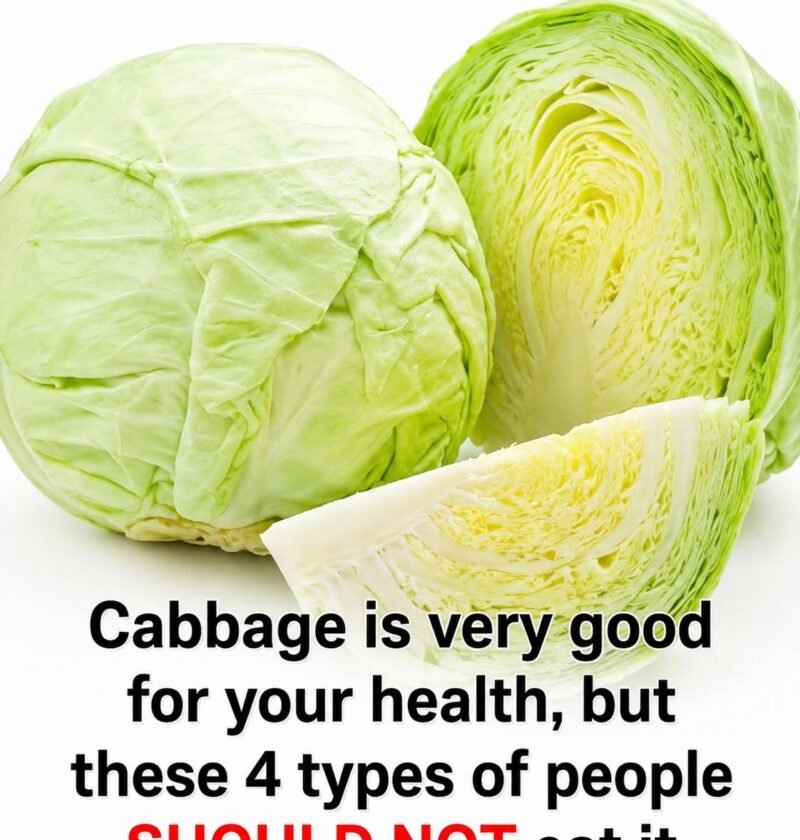
Cabbage is nutritious and is safe for most people. There aren’t four groups who universally must avoid cabbage, but some people may need to limit it or discuss their intake with a clinician.
4 groups who may need caution
-
People taking warfarin — Cabbage contains vitamin K, which can affect warfarin’s action. You generally don’t need to eliminate cabbage, but keeping your vitamin-K intake consistent is important.
-
People with digestive sensitivity — Cabbage can cause gas, bloating, or abdominal discomfort, particularly in people with IBS or sensitivity to fermentable carbohydrates.
-
People with certain thyroid conditions — Cabbage contains goitrogenic compounds, but normal amounts of cooked cabbage are generally considered safe for people with adequate iodine intake. Very large amounts of raw cruciferous vegetables may be worth discussing with a healthcare professional if you have thyroid disease.
-
People with a cabbage allergy — This is uncommon, but anyone who develops symptoms such as hives, swelling, wheezing, or difficulty breathing after eating cabbage should avoid it and seek appropriate medical advice.
For most people, cooked or raw cabbage can be part of a healthy diet.