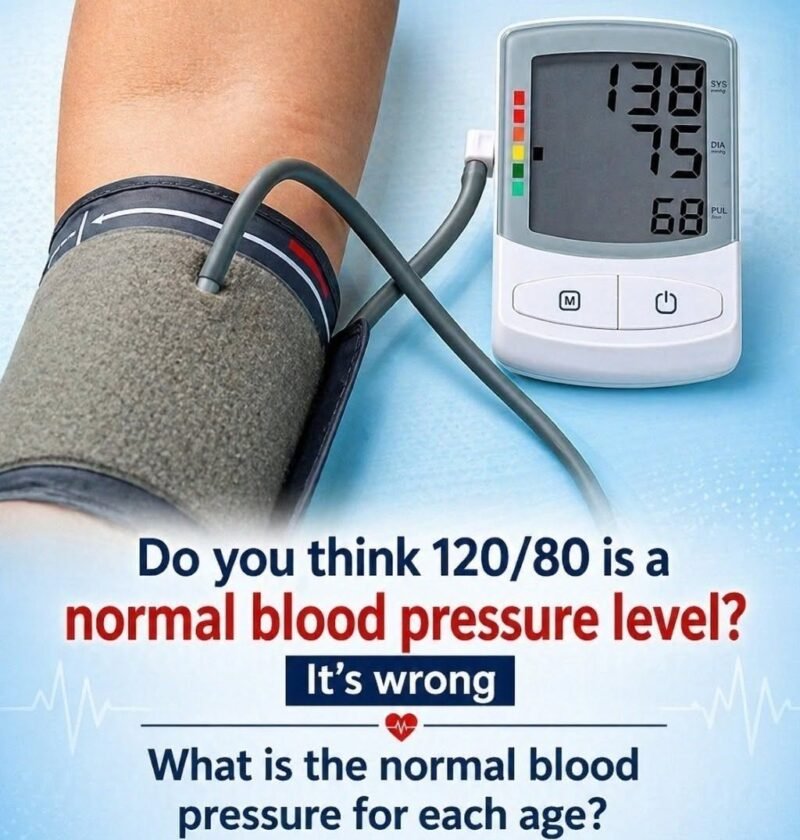
Blood pressure doesn’t have a single “normal” value for each age. For adults, the same general ranges are used regardless of age.
Typical adult blood pressure ranges
| Blood pressure | Systolic (top) | Diastolic (bottom) |
|---|---|---|
| Normal | <120 | <80 |
| Elevated | 120–129 | <80 |
| High — Stage 1 | 130–139 | 80–89 |
| High — Stage 2 | ≥140 | ≥90 |
| Very high | ≥180 | and/or ≥120 |
A reading should ideally be interpreted using multiple measurements, because blood pressure can temporarily change with stress, exercise, caffeine, illness, or medications.
For children and teenagers, normal blood pressure is different and depends on age, sex, and height, so the adult table shouldn’t be used.
If you tell me the person’s age and their blood-pressure reading (for example, 145/90), I can explain what it means.