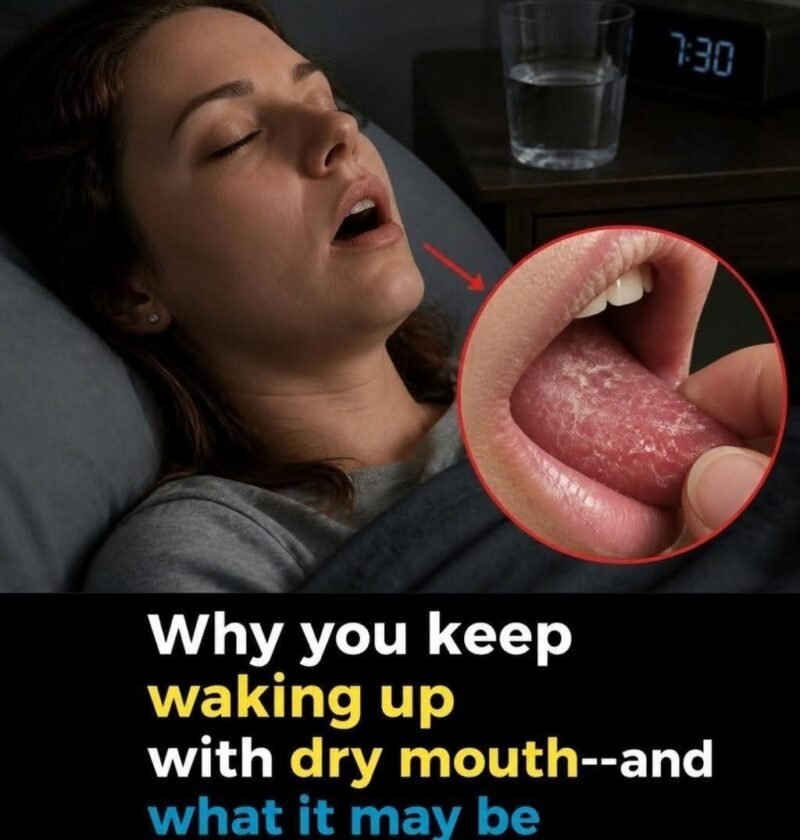
Waking up with a dry mouth is common and usually isn’t a sign of something serious. It often means your mouth wasn’t producing enough saliva overnight or you were breathing through your mouth.
Common reasons for waking up with a dry mouth
-
Mouth breathing — a blocked nose, allergies, a deviated septum, or sleeping with your mouth open can dry out the mouth.
-
Dehydration — not drinking enough fluids, especially after sweating, vomiting, diarrhea, or consuming lots of caffeine.
-
Snoring or sleep apnea — persistent snoring, gasping during sleep, morning headaches, or significant daytime sleepiness can be clues.
-
Medications — many medicines can reduce saliva, including some antihistamines, antidepressants, decongestants, blood-pressure medicines, and others.
-
Alcohol or tobacco — both can contribute to dry mouth.
-
Dry bedroom air — heating or air conditioning can make nighttime dryness worse.
-
Dental or oral problems — reduced saliva increases the risk of cavities, gum disease, bad breath, and oral infections.
-
Medical conditions — persistent dry mouth can sometimes occur with diabetes, Sjögren syndrome, or other conditions.
What you can try
-
Drink adequate water throughout the day.
-
Address nasal congestion if you have it.
-
Avoid tobacco and limit alcohol.
-
Consider a humidifier if your bedroom air is very dry.
-
Chew sugar-free gum or use sugar-free lozenges to stimulate saliva.
-
If you take medications regularly, don’t stop them yourself; ask your doctor or pharmacist whether dry mouth is a possible side effect.
If dry mouth is persistent, severe, accompanied by excessive thirst or frequent urination, difficulty swallowing, recurrent oral infections, or significant snoring/gasping, it’s worth discussing with a healthcare professional.