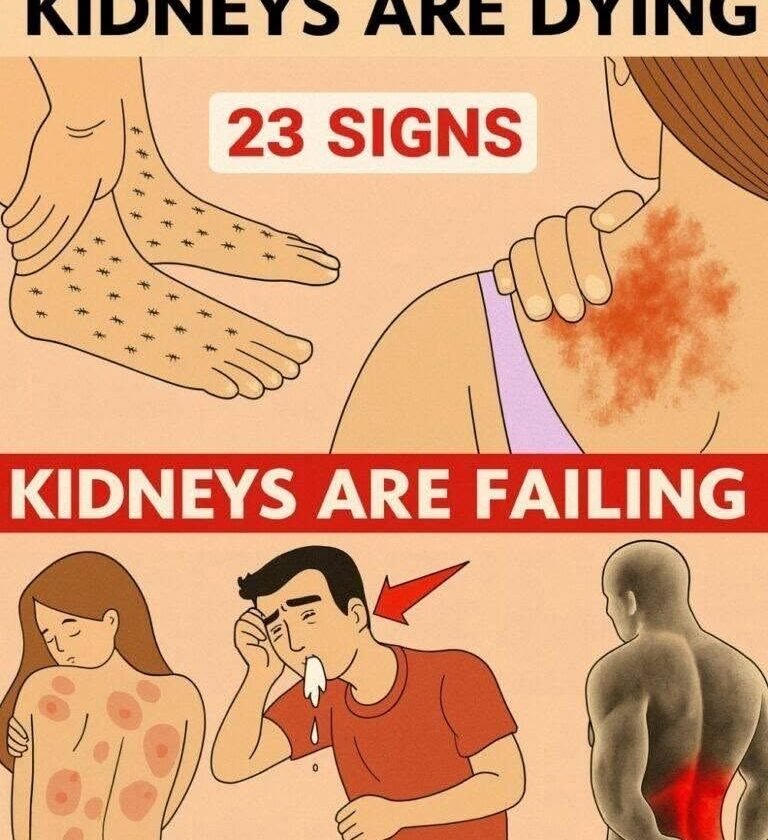
Kidney problems can be surprisingly subtle. Many people with early kidney disease have no symptoms at all, so a list of “strange signs” shouldn’t be used to diagnose kidney disease. A blood test for creatinine/eGFR and a urine test for albumin are much more useful.
23 possible signs to know
-
Foamy or unusually bubbly urine — can indicate excess protein in urine.
-
Blood or pink/red urine — can have many causes, including kidney or urinary-tract problems.
-
Urinating much more often, particularly at night.
-
Urinating much less than usual.
-
Swelling around the ankles or feet.
-
Puffy eyelids, especially in the morning.
-
Unexplained fatigue or weakness.
-
Difficulty concentrating or feeling mentally foggy.
-
Persistent nausea or loss of appetite.
-
Unexplained weight loss.
-
Itchy or unusually dry skin.
-
Muscle cramps or twitching.
-
Muscle weakness.
-
Shortness of breath, particularly when fluid accumulates.
-
High blood pressure, which can both contribute to and result from kidney disease.
-
Persistent back or side pain — more suggestive of certain kidney problems than chronic kidney disease itself.
-
Changes in urine color or appearance.
-
Pain or burning when urinating — often points to a urinary infection rather than chronic kidney disease.
-
Fever and chills with flank pain — can occur with a kidney infection.
-
Metallic taste in the mouth.
-
Bad or ammonia-like breath in advanced kidney failure.
-
Feeling unusually cold or having trouble tolerating cold.
-
Sleep problems or restless legs.
⚠️ The important part
Symptoms such as swelling, fatigue, changes in urination, and itching can have many different causes. Conversely, kidney disease can be present without any symptoms, especially in its earlier stages.
You’re at higher risk if you have diabetes, high blood pressure, cardiovascular disease, a family history of kidney disease, or previous kidney injury.
If you’re concerned, ask a healthcare professional about serum creatinine/eGFR and a urine albumin-to-creatinine ratio (UACR). These are among the key tests used to detect and monitor chronic kidney disease.
Seek urgent medical attention for very little/no urine, severe shortness of breath, severe weakness or confusion, or blood in the urine accompanied by severe pain or illness.