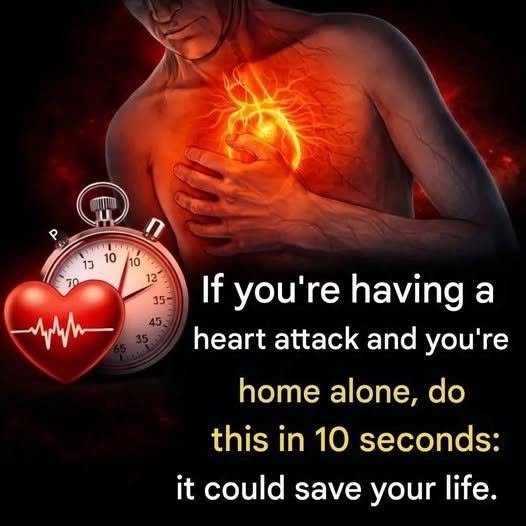
If this is the viral claim about “cough CPR”—coughing forcefully for 10 seconds during a heart attack—don’t rely on it. It is not a proven way to save yourself from a heart attack.
🚨 What to actually do
If you think you’re having a heart attack:
-
Call your local emergency medical service immediately. In Pakistan, the emergency number can vary by location; Rescue 1122 operates in many areas.
-
Stop what you’re doing and sit or lie somewhere safe. Don’t drive yourself to the hospital.
-
Unlock the door if you’re alone and can do so safely.
-
If you have been prescribed nitroglycerin, take it exactly as instructed.
-
Aspirin may be appropriate for some adults, but only if emergency medical professionals advise it and you aren’t allergic, bleeding, or otherwise told not to take it.
-
If you become unconscious and aren’t breathing normally, someone nearby should call emergency services and begin CPR, using an AED if available.
Chest pressure/pain, shortness of breath, cold sweating, nausea, or pain spreading to the arm, back, neck, or jaw can be signs of a heart attack. Don’t wait for symptoms to become severe.