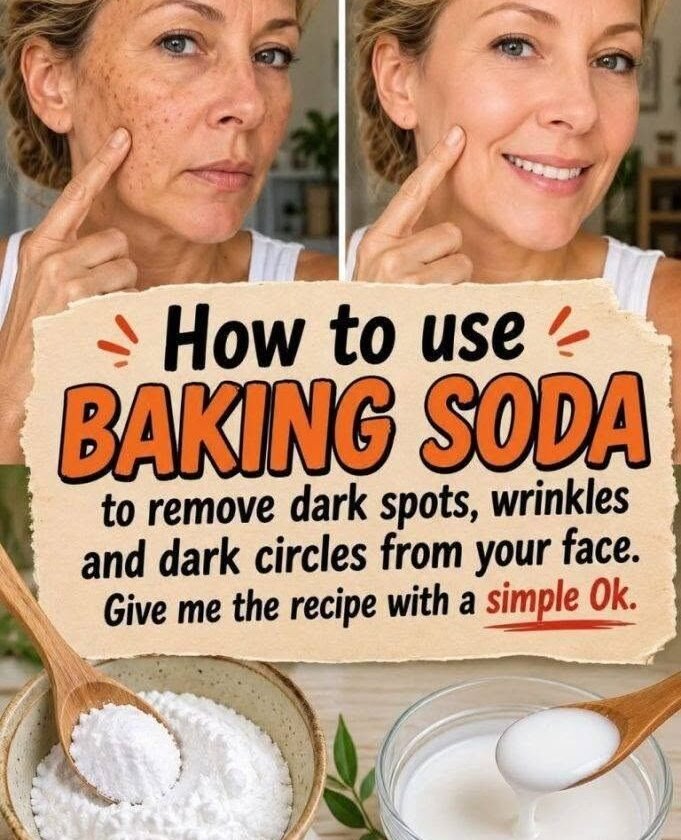
Baking soda on the face: benefits, risks, and safer alternatives
Baking soda (sodium bicarbonate) is sometimes promoted online as a natural facial cleanser, exfoliant, or acne treatment. However, it isn’t a good routine facial product.
Possible benefits
Because baking soda is mildly abrasive and alkaline, it may temporarily:
-
Remove some surface oil and dead skin cells.
-
Make skin feel smoother for a short time.
But these effects don’t mean it’s beneficial for long-term skin health, and there is limited evidence that applying household baking soda to the face treats acne, dark spots, or wrinkles.
⚠️ The main problem: it can irritate your skin
Healthy skin has a naturally slightly acidic pH. Baking soda is alkaline. Repeated application can interfere with the skin barrier and potentially cause:
-
Dryness and tightness
-
Redness and burning
-
Irritation and peeling
-
Increased sensitivity
-
Worsening of eczema or acne in some people
Using it as a rough scrub can add physical irritation on top of the chemical irritation.
If you still want to try it
The safest advice is not to use baking soda as a regular facial treatment. If you are considering it for a specific problem, a dermatologist-approved product designed for facial skin is generally a better option.
Don’t apply baking soda to broken, irritated, sunburned, or freshly shaved skin, and don’t mix it with lemon juice or other acidic ingredients in an attempt to create a “stronger” treatment.
For acne, uneven pigmentation, or oily skin, there are much better-studied ingredients—such as salicylic acid, benzoyl peroxide, azelaic acid, and retinoids, depending on the problem.
Bottom line: Baking soda may make skin feel temporarily cleaner or smoother, but the potential for irritation outweighs the limited cosmetic benefit for most people.