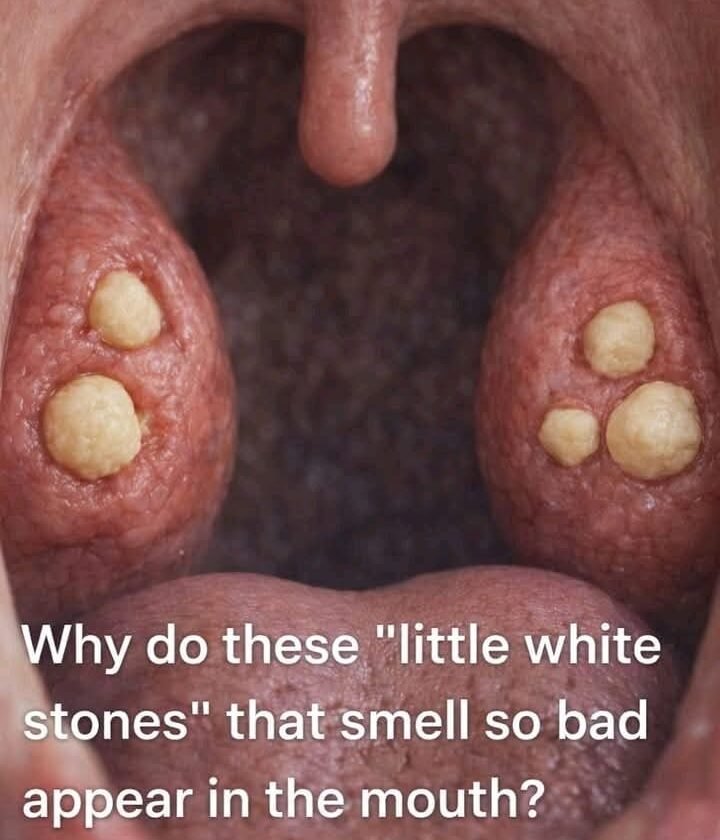
Those small white, foul-smelling stones are usually tonsil stones
They’re called tonsilloliths. They form when mucus, food particles, bacteria, and dead cells become trapped in small pockets (crypts) in the tonsils and gradually harden.
Why do they smell so bad?
The trapped material contains bacteria that produce sulfur-containing compounds, which can create the characteristic rotten-egg or foul odor. Tonsil stones are therefore a common cause of persistent bad breath.
What can you do?
-
Gargle with warm salt water after eating.
-
Brush your teeth twice daily and clean your tongue.
-
Floss or use interdental brushes every day.
-
Stay adequately hydrated.
-
If a stone is visible and easily accessible, gentle gargling may dislodge it.
Avoid digging into your tonsils with fingernails, pins, tweezers, or other sharp objects because the tissue can bleed or become infected.
When to see a doctor or dentist
Get evaluated if you have frequent or large tonsil stones, persistent bad breath despite good oral hygiene, recurrent tonsil infections, significant throat pain, difficulty swallowing, or bleeding.
If you have one-sided throat swelling, severe difficulty swallowing/breathing, or rapidly worsening pain, seek urgent medical attention.
Tonsil stones are usually harmless, but persistent bad breath isn’t always caused by them—gum disease, dental problems, dry mouth, reflux, and other conditions can also be responsible.