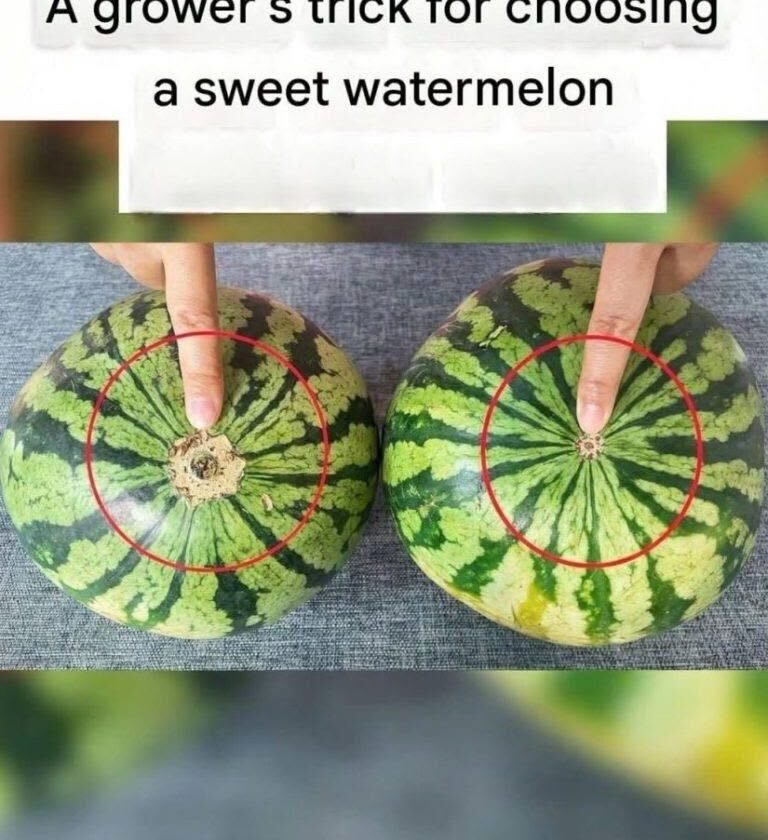
🍉 How to pick a sweeter, riper watermelon
No visual trick can guarantee sweetness—the variety, growing conditions, and maturity all matter—but these signs can help you choose a good melon.
-
Look for a large creamy-yellow field spot. This is the area that rested on the ground. A yellow/cream spot generally indicates the melon stayed on the vine long enough to ripen. A very pale or white spot can indicate less maturity.
-
Choose a dull rather than shiny rind. A mature watermelon often has a somewhat dull appearance. A very glossy rind can be associated with a less mature fruit.
-
Look for strong, well-defined striping. Good contrast between the dark and light stripes can be a useful visual clue, although it isn’t a guarantee of sweetness.
-
Check the stem if it’s visible. A dried, brownish stem can indicate maturity. A very green stem may mean the melon was harvested relatively early.
-
Pick one that feels heavy for its size. This usually indicates plenty of water and a juicy interior.
-
Look for a firm, symmetrical shape. Avoid melons with large soft spots, cuts, bruises, or obvious irregularities.
-
Don’t rely too heavily on tapping. The popular “deep hollow sound” test is subjective and isn’t a reliable guarantee of sweetness.
One important myth
The brown webbing or “sugar spots” sometimes seen on watermelon isn’t a scientifically reliable indicator that the fruit will be exceptionally sweet.
Best practical combination: choose a watermelon that is heavy for its size, firm, symmetrical, and has a substantial creamy-yellow field spot. 🍉