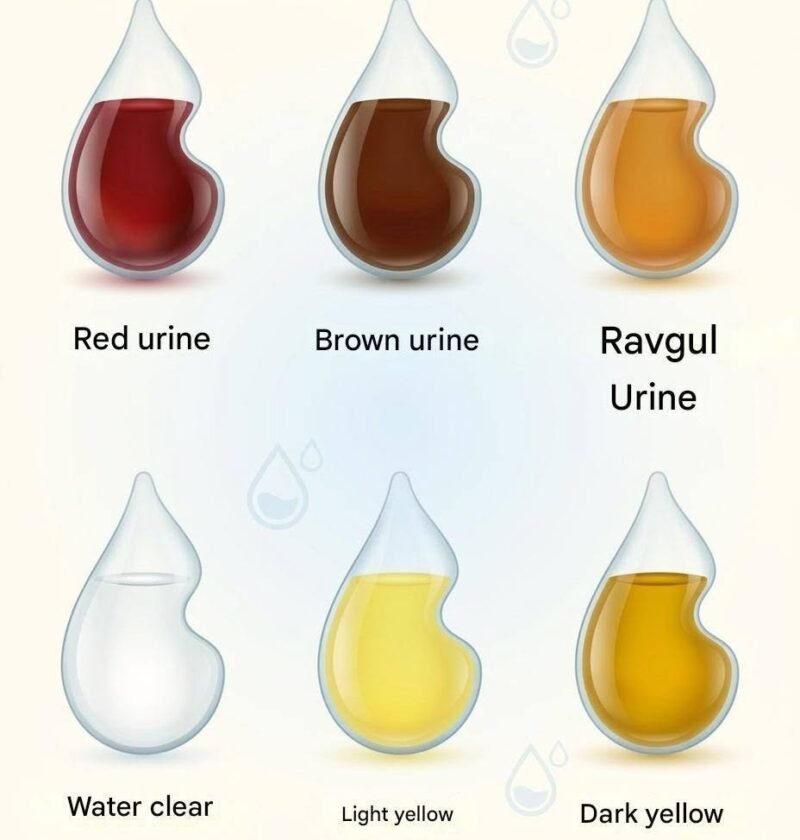
What Does the Color of Your Urine Say About Your Health? 💧
Urine color can provide useful clues about hydration and sometimes health problems, but color alone can’t diagnose a condition.
| Urine color | What it may indicate |
|---|---|
| 🟨 Pale yellow | Usually a sign of good hydration. |
| 🟡 Dark yellow/amber | Often means you’re dehydrated and may need more fluids. |
| 💧 Very clear/colorless | You may be drinking a lot of fluid. If it’s persistently excessive along with intense thirst and frequent urination, discuss it with a doctor. |
| 🟠 Orange | Can result from dehydration or certain medicines and supplements; persistent orange urine should be evaluated. |
| 🩷 Pink/red | Can be caused by foods such as beetroot, but may also indicate blood in the urine. Unexplained blood should be medically evaluated. |
| 🟤 Dark brown/tea-colored | Can occur with severe dehydration, certain medications, liver problems, or muscle breakdown and warrants medical attention if unexplained or persistent. |
| 🟢/🔵 Green/blue | Uncommon; can result from certain medicines, dyes, or occasionally infections. |
| ☁️ Cloudy/milky | May occur with dehydration or crystals, but can also be associated with a urinary infection or other urinary problems. |
Don’t forget about medications and food
Some vitamins—particularly B vitamins—and medications can dramatically change urine color without indicating a serious problem. Foods and food dyes can do the same.
When should you get checked?
Seek medical advice if you notice unexplained red, brown, or persistently cloudy urine, especially if accompanied by pain, fever, burning when urinating, back/flank pain, swelling, or reduced urine output.
One of the most useful clues is a persistent change from your normal urine, rather than a single unusual color.