Normal Blood Pressure by Age
There isn’t a separate “normal” blood-pressure number for every age. For adults, clinicians generally use the same categories, although treatment targets can be individualized based on overall health.
| Age | Generally desirable |
|---|---|
| 18–39 | Around <120/80 mmHg |
| 40–59 | Around <120/80 mmHg |
| 60–69 | Around <120/80 mmHg, if tolerated |
| 70–79 | Around <120/80 mmHg, but treatment goals may be individualized |
| 80+ | No single age-specific “normal”; targets depend on health, frailty, medications, and clinician assessment |
Understanding the numbers
-
Systolic (top number): pressure when the heart contracts.
-
Diastolic (bottom number): pressure between heartbeats.
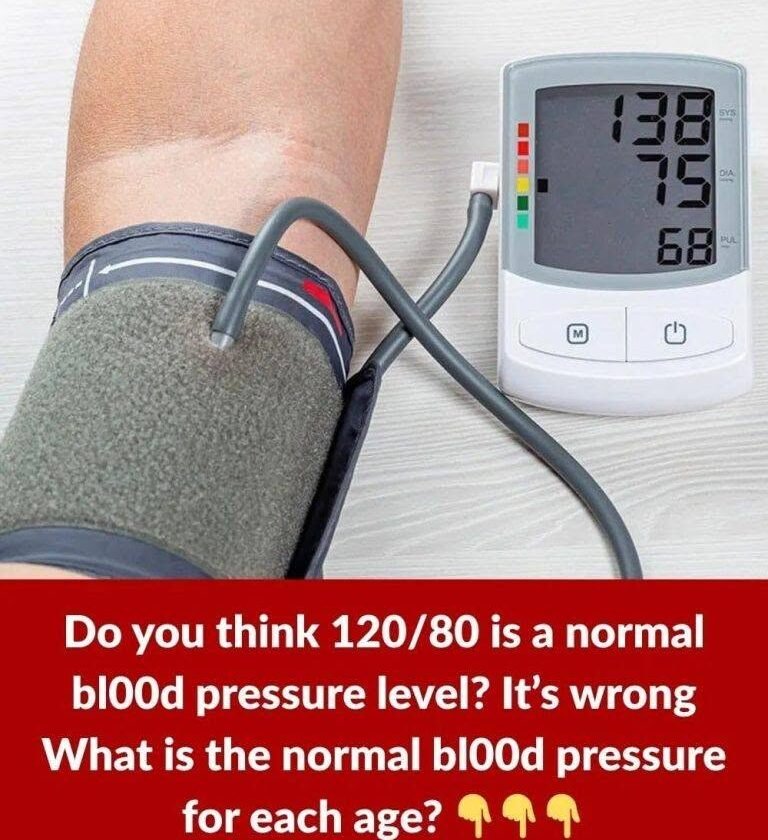
For most adults, less than 120/80 mmHg is considered normal blood pressure. A reading consistently at or above 130/80 may indicate hypertension depending on the guideline being used and how the measurements were obtained.
A single high reading doesn’t necessarily mean you have hypertension. Blood pressure varies with stress, exercise, caffeine, pain, and even how you measure it.
If you tell me your age and your recent blood-pressure reading (for example, 145/85), I can explain what that reading means.