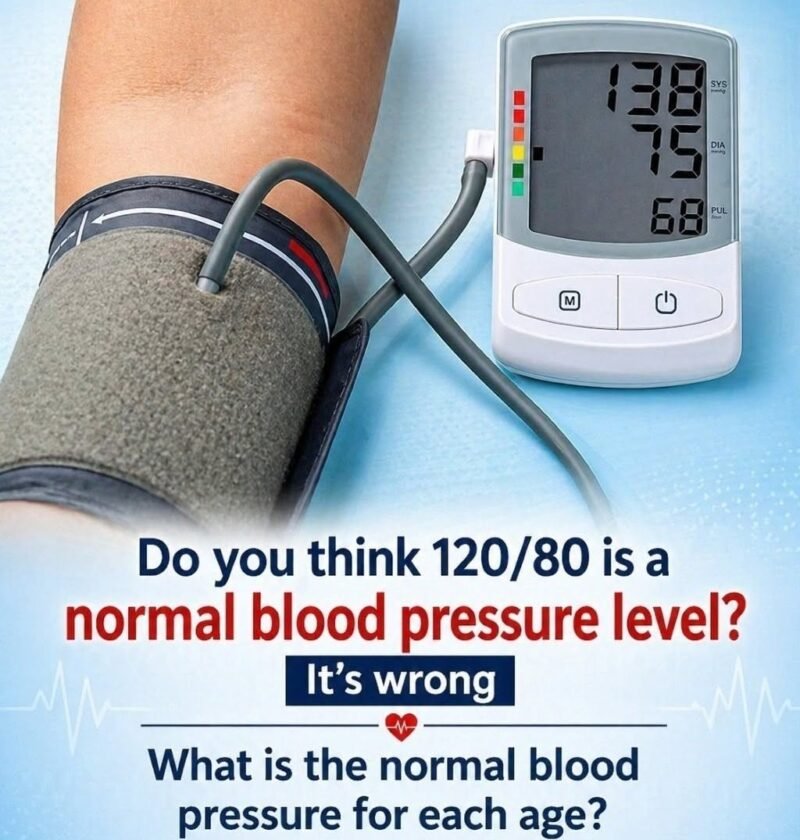
There isn’t a separate “normal” blood-pressure number for every age. For adults, blood-pressure categories generally apply regardless of whether you’re 40, 60, or 80.
Adult blood-pressure ranges
| Category | Systolic (top) | Diastolic (bottom) |
|---|---|---|
| Normal | <120 | and <80 |
| Elevated | 120–129 | and <80 |
| High — Stage 1 | 130–139 | or 80–89 |
| High — Stage 2 | ≥140 | or ≥90 |
| Severely high | ≥180 | and/or ≥120 |
For example, 145/75 is considered high because the systolic number is elevated, even though the diastolic number is below 80.
For older adults, doctors may individualize treatment targets based on overall health, other medical conditions, medications, and the risk of dizziness or falls. Being older doesn’t automatically make high blood pressure normal.
If you have a reading of 180/120 or higher, repeat it after resting quietly for several minutes. If it remains that high, seek urgent medical advice. If it is accompanied by chest pain, difficulty breathing, severe headache, confusion, weakness/numbness, vision changes, or difficulty speaking, seek emergency care immediately.