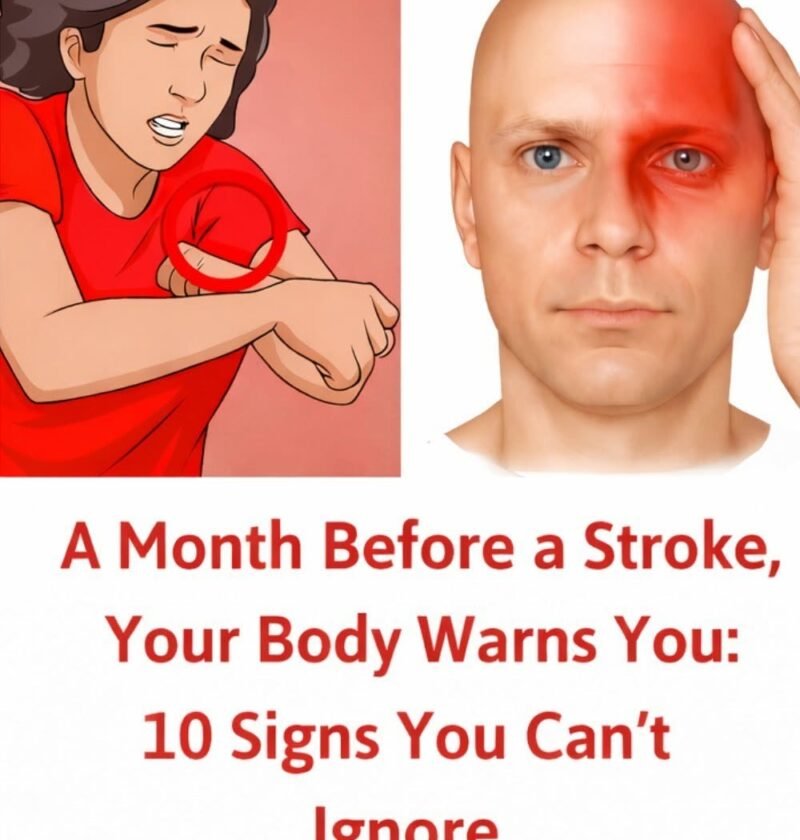
When viral headlines suggest that the body “warns you a month before a stroke,” they are usually referring to Transient Ischemic Attacks (TIAs)—commonly known as “mini-strokes”—or subtle neurological red flags that occur days, weeks, or even months before a major medical event.
A TIA happens when blood flow to a part of the brain is temporarily blocked. Because the blockage resolves on its own before permanent brain cell death occurs, the symptoms typically disappear entirely within a few minutes to an hour.
Because these early warning signs come and go so quickly, they are frequently brushed off as fatigue, aging, stress, or a pinched nerve. However, a TIA is a critical medical emergency and a major warning sign that a larger, potentially disabling stroke may follow.
Recognizing these pre-stroke or mini-stroke signs can be life-saving:
1. Transient Numbness or Weakness
-
What it looks like: A sudden loss of strength or a “pins and needles” sensation affecting the face, arm, or leg, almost always restricted to one side of the body. You might find yourself dropping objects, dragging a foot, or struggling to keep one arm raised.
2. Sudden Speech Difficulties or Confusion
-
What it looks like: Slurred speech, trouble finding the right words, or an inability to comprehend what others are saying. The person might sound intoxicated or confused for a brief period before returning to normal.
3. Vision Disturbances (Including “Amaurosis Fugax”)
-
What it looks like: Sudden blurring, double vision, or a temporary loss of sight in one or both eyes. A classic, distinct sign of a retinal TIA is a feeling like a “dark curtain” or shade being pulled down over one eye.
4. Sudden Dizziness and Loss of Balance
-
What it looks like: Unexplained vertigo, a spinning sensation, stumbling, or a sudden inability to coordinate your steps. While dizziness has many benign causes, when it strikes abruptly alongside other neurological symptoms, it points to the brain’s coordination centers.
5. Sudden, Severe Headaches
-
What it looks like: An intense, blinding headache that comes on abruptly with no apparent cause, sometimes described by patients as “the worst headache of my life”. While more commonly tied to bleeding strokes (hemorrhagic), sudden severe head pain can accompany warning events.
6. Unexplained Mental “Fog” or Behavioral Changes
-
What it looks like: Sudden, uncharacteristic difficulty concentrating, processing information, or maintaining a train of thought. In older adults, brief episodes of acute confusion are sometimes incorrectly written off as “senior moments” rather than evaluated as vascular events.
7. Facial Drooping
-
What it looks like: One side of the face suddenly feels heavy, numb, or begins to sag. This is often first noticed by a family member or coworker when the person tries to smile and the smile appears uneven.
8. Sudden Fatigue or General Weakness
-
What it looksLike: Overwhelming, sudden exhaustion or a heavy, drained feeling that does not stem from physical exertion or lack of sleep.
9. Atypical Symptoms (Particularly in Women)
-
What it looks like: Alongside classic neurological signs, women experiencing early vascular events can occasionally present with atypical symptoms like sudden shortness of breath, unexplained nausea, or generalized bodily weakness.
10. Brief Episodes of Memory Loss or Disorientation
-
What it looks like: Brief, isolated periods of losing track of where you are or struggling to recall immediate memories, which clear up completely after a short duration.