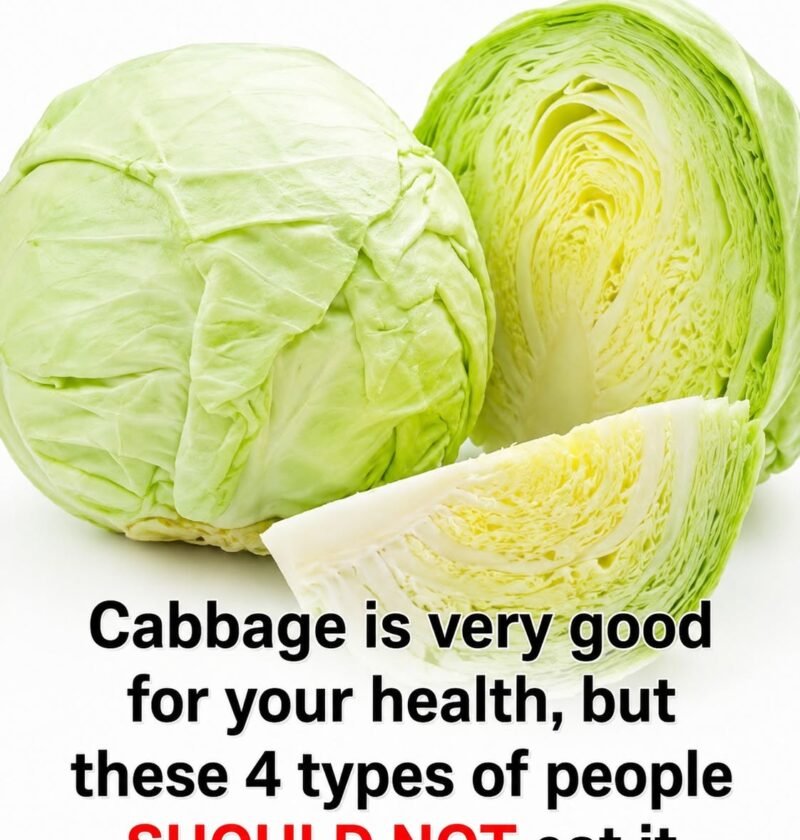
Cabbage is nutritious and safe for most people. There aren’t four broad groups who must completely avoid it, but some people may need to limit it or be cautious:
-
People with a cabbage/cruciferous-vegetable allergy — A true allergy is uncommon, but anyone who develops hives, swelling, wheezing, vomiting, or other allergic symptoms after eating cabbage should avoid it and seek medical advice.
-
People who develop significant gas or bloating — Cabbage contains fermentable carbohydrates and fiber that can cause gas, abdominal discomfort, or bloating in some people. Smaller portions or cooked cabbage may be better tolerated.
-
People taking warfarin — Cabbage contains vitamin K, which can affect warfarin’s anticoagulant effect. This doesn’t necessarily mean cabbage must be avoided; consistent vitamin-K intake is generally more important. Don’t substantially change your intake without discussing it with your clinician.
-
People with certain thyroid conditions and very high cruciferous-vegetable intake — Cabbage contains compounds called glucosinolates. Normal amounts of cabbage are generally not a concern, but very large quantities of raw cruciferous vegetables may be relevant in people with iodine deficiency or certain thyroid problems. Discuss major dietary changes with your clinician.
Bottom line: For most people, cabbage can be part of a healthy diet. Claims that people with diabetes, kidney disease, arthritis, or older age must automatically avoid cabbage are not medically sound.