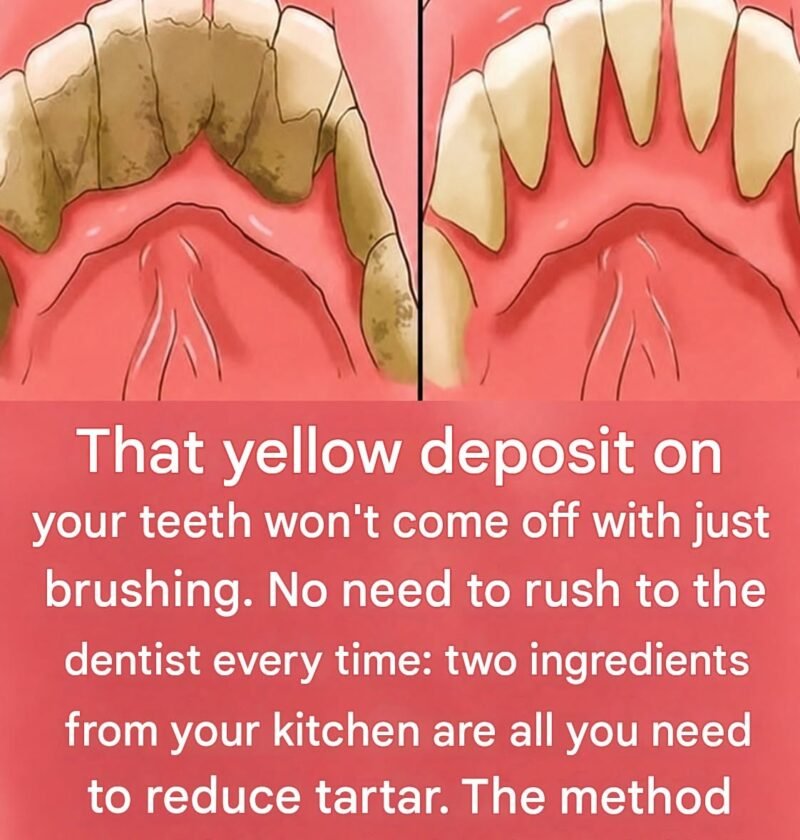
Can you remove tartar at home? 🦷
Be careful with the phrase “be your own dentist.” Once plaque hardens into tartar (dental calculus), you generally can’t safely remove it yourself with household tools. Scraping it off can damage enamel or injure your gums.
What you can do at home
-
Brush twice daily with fluoride toothpaste using a soft-bristled toothbrush.
-
Clean between your teeth every day with floss or interdental brushes.
-
Consider an ADA-approved tartar-control toothpaste to help reduce new buildup.
-
An antiseptic mouthwash may help with plaque control, but it won’t remove established tartar.
-
Don’t smoke or use tobacco, which can worsen staining and gum disease.
🚫 Avoid DIY tartar scraping
Don’t use needles, knives, metal instruments, or other sharp objects. Also be cautious with aggressive “natural” remedies such as lemon juice or undiluted vinegar—they’re acidic and can damage enamel.
How tartar is actually removed
A dentist or dental hygienist can remove established calculus using professional scaling instruments. Regular dental examinations can also identify gingivitis, gum disease, cavities, and other problems before they become more serious.
See a dentist if you have bleeding or swollen gums, persistent bad breath, loose teeth, significant sensitivity, or visible hard deposits around your teeth.
Bottom line: You can prevent and control plaque at home, but established tartar is best removed professionally rather than scraped away yourself.