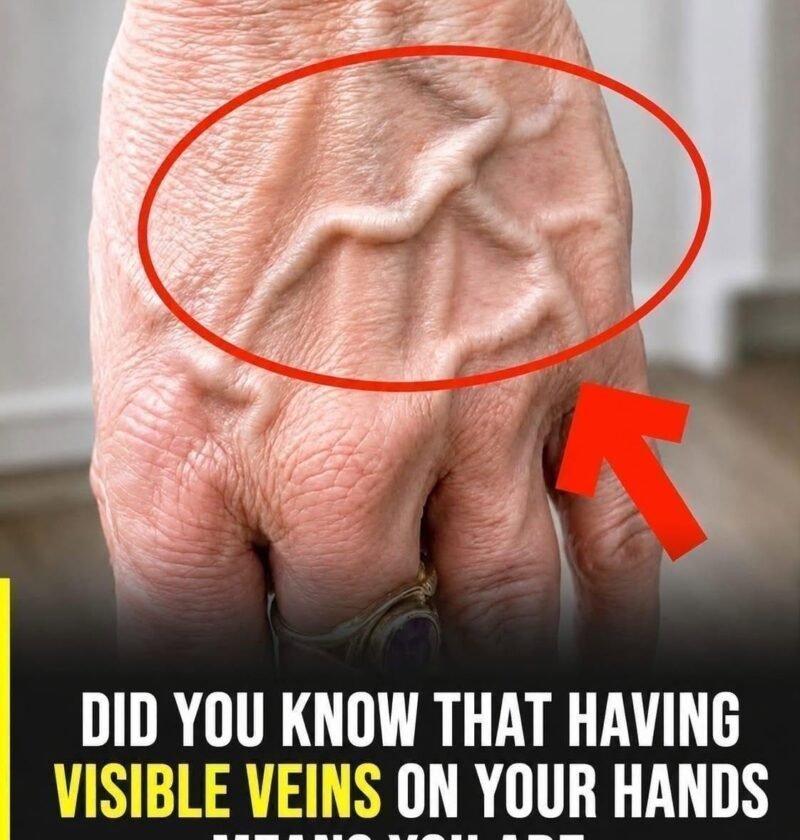
If you’re looking for an accurate health-awareness version of that clickbait headline, visible veins do not automatically mean something is wrong. They can be completely normal.
What visible veins can mean
-
Low body fat: Less tissue covering the veins can make them more noticeable.
-
Exercise: Increased blood flow and temporarily enlarged veins can make them stand out, especially after strength training.
-
Genetics: Some people naturally have more prominent superficial veins.
-
Heat: Warm temperatures can cause blood vessels near the skin to widen.
-
Aging: Skin becomes thinner with age, making veins easier to see.
-
Dehydration: In some circumstances, dehydration can make veins appear more prominent, although it isn’t a reliable diagnostic sign.
When visible veins deserve attention
A vein that suddenly becomes swollen, painful, red, warm, hard, or noticeably different from the other side should be medically evaluated. Prominent veins accompanied by significant swelling or pain can sometimes indicate a vascular problem.
So, visible veins alone aren’t a reliable sign of a specific disease or health condition. Context and other symptoms matter.