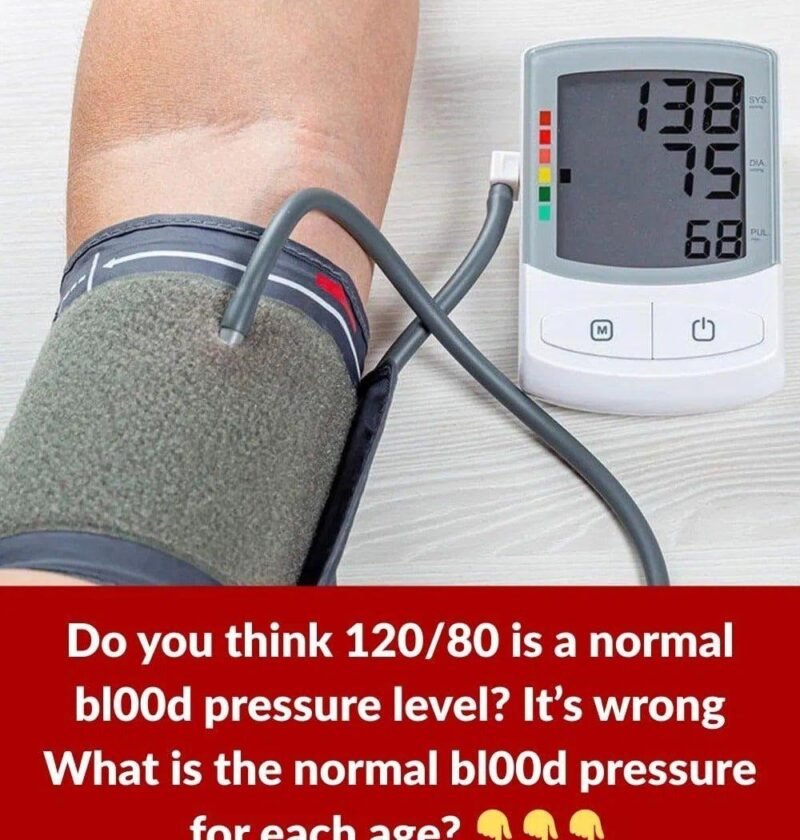
Blood pressure doesn’t have a different single “normal” number for every age. For most adults, normal blood pressure is below 120/80 mmHg, regardless of whether you’re 40, 60, or 80. Treatment targets can differ depending on overall health and medical conditions.
❤️ What Is a Normal Blood Pressure at Different Ages?
You may see charts claiming that your blood pressure should be a specific number based on your age. In reality, there isn’t one universally accepted “normal” blood pressure for each age.
For adults, a useful general guide is:
- 👨🦱 18–39: Generally below 120/80 mmHg
- 👨 40–59: Generally below 120/80 mmHg
- 👵 60 and older: Generally below 120/80 mmHg, although an individual’s treatment goal may be different.
🩺 Understanding the numbers
Systolic (top number): Pressure when your heart contracts.
Diastolic (bottom number): Pressure when your heart relaxes.
For adults, commonly used categories are:
🟢 Normal: Less than 120/80
🟡 Elevated: 120–129 and less than 80
🟠 High blood pressure: 130/80 or higher
One reading isn’t usually enough to diagnose hypertension. Blood pressure varies with activity, stress, caffeine, medications, and even how you sit during measurement.
🚨 Very high blood pressure (around 180/120 mmHg or higher) requires immediate attention, especially if accompanied by chest pain, shortness of breath, weakness, confusion, vision changes, or difficulty speaking.
❤️ The goal isn’t to chase a particular number based only on age. Your healthcare professional can determine the appropriate target based on your health, medications, and cardiovascular risk.