🚨 23 Signs Your Kidneys Might Be in Trouble
Kidney disease can be difficult to recognize because early chronic kidney disease often causes no symptoms. When symptoms appear, they can be caused by many other conditions, so they aren’t a diagnosis by themselves.
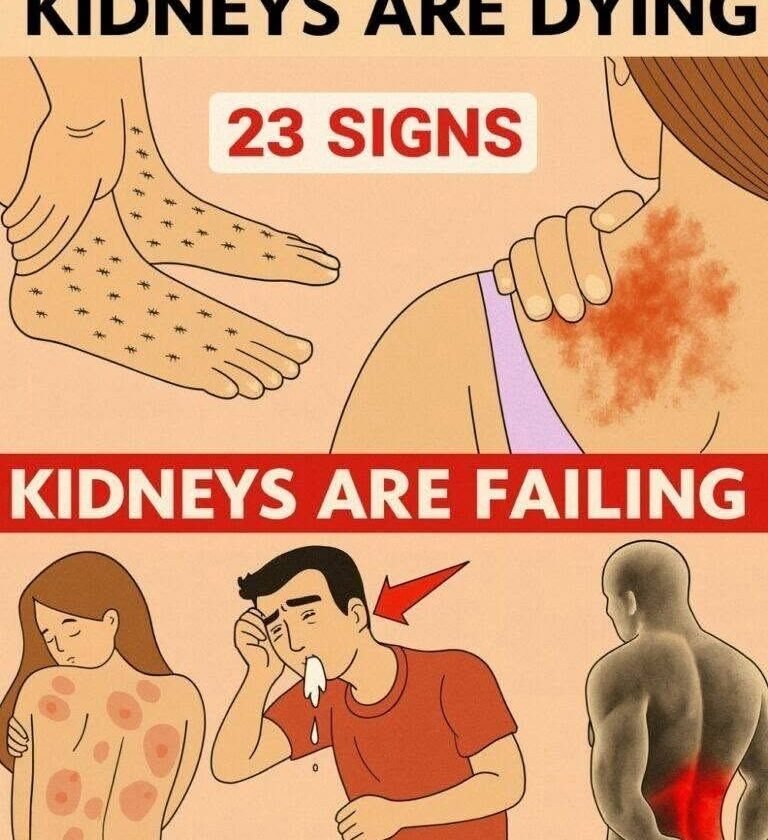
Here are 23 signs worth discussing with a healthcare professional:
- Swelling in the ankles, feet, or legs — excess fluid can accumulate when kidney function is reduced.
- Puffiness around the eyes — especially if it is persistent or noticeable in the morning.
- Foamy or unusually bubbly urine — may indicate protein in the urine.
- Blood in the urine — urine can appear pink, red, or cola-colored.
- Urinating more frequently — particularly at night.
- Producing much less urine than usual.
- Changes in urine appearance or odor — although these often have causes unrelated to kidney disease.
- Persistent fatigue or weakness — advanced kidney disease can contribute to anemia.
- Difficulty concentrating or feeling mentally “foggy.”
- Trouble sleeping or restless sleep.
- Persistent itching — more common in advanced kidney disease.
- Dry or unusually itchy skin.
- Muscle cramps or twitching.
- Loss of appetite.
- Nausea or vomiting.
- Unexplained weight loss or, in some cases, weight gain from fluid retention.
- Metallic taste in the mouth or changes in taste.
- Bad breath that persists despite good oral hygiene.
- Shortness of breath — particularly when fluid accumulates or anemia develops.
- Persistent high blood pressure — both a cause and consequence of kidney disease.
- Pain in the side or back — this can occur with kidney stones or infections, but isn’t typical of uncomplicated chronic kidney disease.
- Headaches or dizziness — particularly when associated with uncontrolled blood pressure.
- Feeling generally unwell without an obvious explanation.
🧪 Don’t wait for symptoms
Symptoms aren’t the best way to detect kidney disease. Two important tests are:
- eGFR: a blood test calculation that estimates kidney filtration.
- Urine albumin-to-creatinine ratio (uACR): detects albumin leaking into the urine, which can be an early sign of kidney damage.
People with diabetes, high blood pressure, cardiovascular disease, or a family history of kidney disease may need regular screening even when they feel completely healthy.
🚨 Get urgent help for certain symptoms
Seek urgent medical attention for very little or no urine, severe shortness of breath, chest pain, confusion, fainting, severe weakness, or sudden swelling, particularly when these symptoms develop rapidly.
And don’t assume that a supplement, “kidney detox,” or particular food can repair failing kidneys. Finding kidney disease early and treating its underlying cause is far more important.