🚨 9 Warning Signs Your Kidneys May Be Failing — and the Tests That Matter
Kidney disease can be especially dangerous because early chronic kidney disease often causes few or no symptoms. By the time symptoms become obvious, kidney function may already be significantly reduced. NIDDK+1
9 signs you shouldn’t ignore
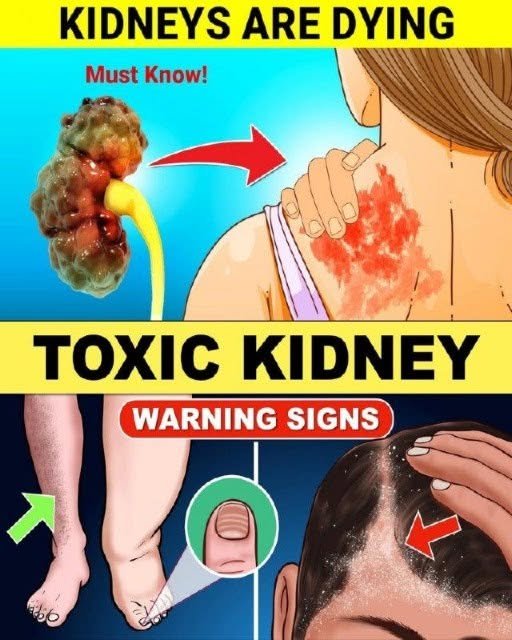
- Swelling in the feet, ankles, legs, or around the eyes — damaged kidneys may have difficulty removing excess salt and fluid. NIDDK
- Unusual or persistent fatigue — advanced kidney disease can cause tiredness and weakness.
- Changes in urination — noticeably more or less urine than usual can be a warning sign. National Kidney Foundation
- Foamy or unusually bubbly urine — this can indicate excess protein (albumin) in the urine.
- Blood in the urine — pink, red, or cola-colored urine needs medical evaluation.
- Persistent itching — can occur as kidney disease becomes advanced. National Kidney Foundation
- Nausea, vomiting, or loss of appetite — these can occur when kidney function becomes severely impaired.
- Muscle cramps or weakness — advanced kidney disease can cause changes in minerals and body chemistry.
- Shortness of breath — may occur when excess fluid accumulates or anemia develops. National Kidney Foundation
These symptoms don’t prove that your kidneys are failing. They can have many other causes.
🧪 The most important kidney tests
Don’t wait for symptoms if you’re at increased risk. Two key tests are:
- eGFR: A blood test based primarily on creatinine that estimates how well your kidneys filter blood.
- uACR (urine albumin-to-creatinine ratio): A urine test that detects albumin leaking into the urine, which can be an early sign of kidney damage. National Kidney Foundation+1
Blood pressure and blood glucose are also important because high blood pressure and diabetes are major causes of chronic kidney disease. NIDDK+1
🛡️ Can kidney failure be prevented?
Sometimes progression can be slowed substantially, particularly when kidney disease is discovered early. Controlling blood pressure and blood sugar, taking prescribed medications correctly, avoiding kidney-harming medicines when advised, and following an individualized diet can all help protect remaining kidney function. National Kidney Foundation+1
The phrase “tests to avoid dialysis” needs an important correction: no test itself prevents dialysis. Testing helps identify kidney damage early so the underlying disease can be treated and progression potentially slowed.
If kidney function falls to less than about 15% of normal, this is considered kidney failure, and treatment options may include dialysis or kidney transplantation. NIDDK
If you have diabetes, high blood pressure, heart disease, or a family history of kidney failure, ask your healthcare professional about regular eGFR and uACR testing—even if you feel completely well. NIDDK+1