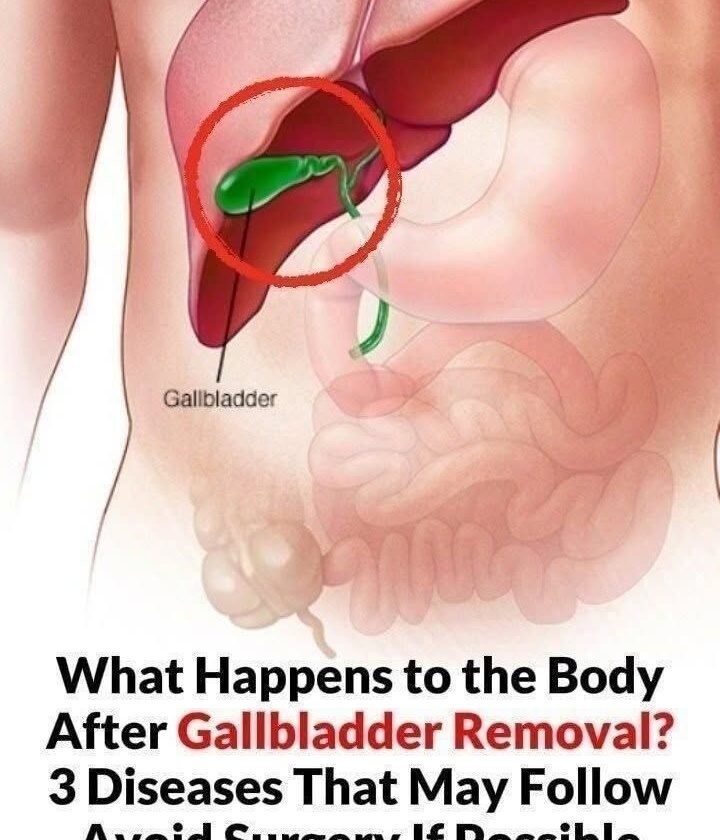
The headline “After gallbladder removal: 3 conditions you could develop — why you should avoid the surgery when possible” is misleading. Gallbladder removal (cholecystectomy) is a common and generally safe operation, and whether you should have it depends on why surgery has been recommended. NIDDK+1
What can happen after gallbladder removal?
Three issues worth knowing about are:
- Diarrhea or changed bowel habits
A small number of people develop softer or more frequent stools because bile flows continuously into the intestine. This is often temporary. NIDDK - Persistent abdominal or digestive symptoms
Some people continue to experience pain, indigestion, bloating or diarrhea after surgery. Importantly, this doesn’t necessarily mean the operation caused a new disease; sometimes the original symptoms had another cause. - Bile-duct complications
Injury to the bile duct is an uncommon but potentially serious surgical complication. It can cause bile leakage, infection or blockage and may require additional procedures or surgery. Current surgical guidelines emphasize techniques designed to reduce this risk. SAGES+1
Does that mean you should avoid the operation?
Not generally. If gallstones are causing repeated attacks, acute/chronic inflammation, complications, or obstruction, surgery may prevent much more serious problems. Nonsurgical treatment is used only in selected situations, and gallstones can return after nonsurgical treatment. NIDDK
On the other hand, gallstones that cause no symptoms often don’t require immediate surgery. The decision should be based on symptoms, complications, your other medical conditions, surgical risk, and your preferences.
Since you’re 83, age alone doesn’t automatically rule out gallbladder surgery, but your overall health and surgical risk are particularly important. If you’re being advised to have the operation, I can help you understand whether surgery is usually recommended in your particular situation if you tell me what your doctor found (for example, gallstones, inflammation, a blocked duct, polyps, or an abnormal ultrasound) and what symptoms you’re having.
Sources