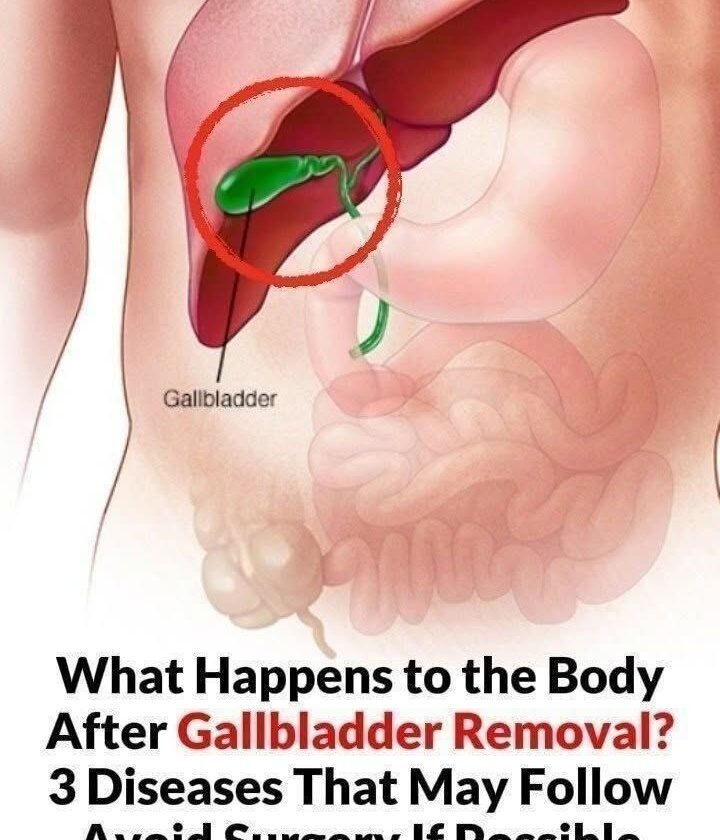
Gallbladder removal (cholecystectomy) is generally considered safe and is often the best treatment for symptomatic gallstones or a diseased/infected gallbladder. But it’s not true that everyone should avoid surgery—whether it’s appropriate depends on the reason for surgery, symptoms, complications, and individual risks.
After removal:
- Bile flows continuously from the liver into the intestine instead of being stored and released by the gallbladder.
- Some people temporarily develop diarrhea, bloating, indigestion, or difficulty tolerating fatty meals. These often improve with time.
- A small proportion have persistent digestive symptoms, sometimes called post-cholecystectomy syndrome. The cause can be bile-acid diarrhea, reflux, retained/common-bile-duct stones, or another gastrointestinal condition.
About the “3 diseases” claim
There isn’t a standard medical list of three diseases that necessarily follow gallbladder removal. Claims that surgery routinely causes three specific diseases are misleading.
Possible complications or longer-term problems include:
- Bile-acid diarrhea — excess bile acids reaching the colon can cause chronic loose stools in some people; it can often be treated.
- Bile-duct problems or retained stones — uncommon, but stones can remain or form in the bile ducts and cause pain, jaundice, or pancreatitis.
- Digestive symptoms/reflux — some people experience persistent abdominal discomfort, bloating, or reflux, although these aren’t inevitable consequences of surgery.
Should you avoid surgery if possible?
Not necessarily. If gallstones are found incidentally and cause no symptoms, surgery is often not needed. But avoiding surgery when there is acute cholecystitis, recurrent painful attacks, gallstone pancreatitis, obstruction, or another clear indication can carry its own risks.
If you’re considering surgery, tell me why your doctor recommended gallbladder removal (e.g., stones, inflammation, polyps, pain, pancreatitis) and whether you currently have symptoms. I can explain when surgery is usually recommended and what non-surgical options may realistically exist.