What does the “5 diseases” claim actually
mean?
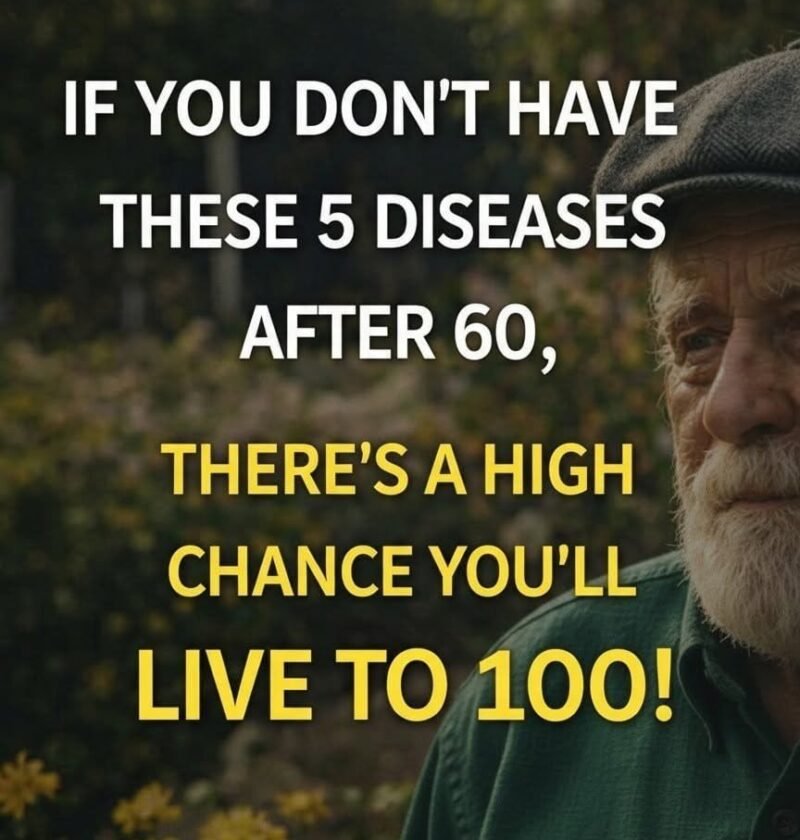
The viral statement “If you reach 60 without these 5 diseases, you have a high probability of living to 100” contains a grain of truth, but the wording is too strong.
Research does show that people who reach very old ages tend to develop major age-related diseases later—or avoid some of them altogether. But there is no scientifically established rule that being free of five diseases at 60 gives you a “high probability” of reaching 100. PubMed+1
A commonly circulated version identifies these five conditions:
- Heart disease / cardiovascular disease
- Type 2 diabetes
- Cancer
- Stroke
- Dementia/Alzheimer’s disease
However, different versions of the viral claim use different lists, so these should not be treated as an official medical “five-disease test.”
1. Cardiovascular disease ❤️
Heart disease and stroke are major determinants of survival into advanced age. Maintaining healthy blood pressure, cholesterol, blood sugar, weight, physical activity and avoiding tobacco can substantially improve cardiovascular health.
Importantly, simply having no diagnosed heart disease at 60 doesn’t mean your arteries are completely healthy. High blood pressure and atherosclerosis can exist without obvious symptoms.
2. Type 2 diabetes 🩸
Diabetes can damage blood vessels and increase the risk of cardiovascular disease, kidney disease, nerve damage and other complications.
Research supports the broader idea that better cardiovascular/metabolic health is associated with longer life and more years lived without major chronic diseases. A large UK study found that better cardiovascular health was associated with longer overall life expectancy and more years free of cardiovascular disease, diabetes, cancer and dementia. PubMed Central (PMC)+1
3. Cancer
Cancer becomes increasingly common with age, so reaching 60 without cancer is favorable—but it certainly doesn’t mean cancer cannot develop later.
Interestingly, research following more than 170,000 people in Stockholm County found that people who eventually reached 100 generally had lower rates of several cancers and cardiovascular events than people who died younger. PubMed+1
4. Stroke
Avoiding a stroke is particularly important because stroke can cause both premature death and long-term disability.
In the Swedish study, the estimated lifetime risk of stroke from age 60 was 18.5% among people who ultimately became centenarians, compared with higher risks in several groups who died younger. PubMed Central (PMC)
That doesn’t mean a person who has never had a stroke at 60 has an 81.5% chance of avoiding one until death; it’s a population-level observation, not an individual prediction.
5. Dementia
Preserving cognitive health is another important component of healthy longevity. But dementia is complicated: age, genetics, cardiovascular health, education, hearing, physical activity and other factors can influence risk.
And some centenarians do develop cognitive impairment. In one US study, more than half of centenarians reached 100 without cognitive impairment, showing that exceptional longevity can occur with relatively good cognitive health—but not universally. PubMed
So, can you predict reaching 100 at age 60?
No. This is the most important correction to the viral headline.
A 2024 analysis of 170,787 people followed from age 60 found that people who became centenarians generally had lower rates of major diseases and tended to delay or avoid them. That’s strong evidence for the association between disease-free aging and exceptional longevity. PubMed+1
But reaching 100 is still unusual, and longevity depends on much more than whether five diagnoses are absent—including genetics, smoking, blood pressure, physical activity, metabolic health, environment, socioeconomic circumstances and chance.
In fact, another study found that about 23% of centenarians reached 100 without a major chronic disease, illustrating that even among people who actually make it to 100, health profiles vary considerably. PubMed
The better interpretation
Instead of:
“If you’re healthy at 60, you’ll probably live to 100.”
Think of it as:
“Being free of major chronic diseases at 60 is a favorable sign and is associated with a greater likelihood of healthy longevity, but it cannot predict whether an individual will reach 100.”
So the useful message isn’t to obsess over five diseases. It’s to control the modifiable risk factors that contribute to many of them: don’t smoke, stay physically active, maintain healthy blood pressure and cholesterol, manage blood sugar, maintain a healthy weight, eat a nutritious diet, sleep adequately, and keep up with appropriate screening and preventive care.
Sources