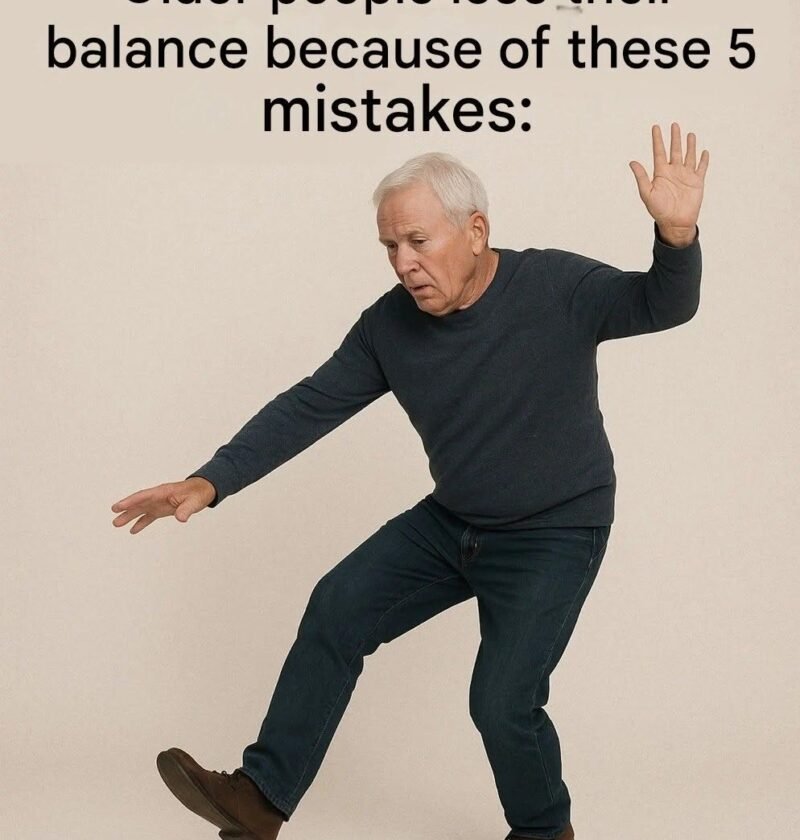
5 Common Mistakes That Can Make Older Adults Lose Their Balance
Balance naturally can change with age, but frequent falls or new balance problems shouldn’t simply be dismissed as “getting older.” Several everyday habits can increase fall risk.
1. 🪑 Sitting too much
Long periods of inactivity can weaken the legs and reduce balance and coordination. Regular walking and appropriately challenging strength and balance exercises can help maintain mobility.
2. 👟 Wearing unsafe footwear
Loose slippers, smooth-soled shoes, high heels, or poorly fitting footwear can make slipping or tripping more likely. Shoes that fit securely and have appropriate traction are generally safer.
3. 💊 Ignoring medication side effects
Some medicines can cause dizziness, drowsiness, low blood pressure, or impaired coordination. Taking multiple medications can increase the risk. Don’t stop prescribed medicines yourself; ask a doctor or pharmacist to review them.
4. 🌙 Poor lighting and household hazards
Dim stairways, loose rugs, clutter, electrical cords, and slippery bathroom surfaces are common contributors to falls. Improving lighting and removing trip hazards can make a significant difference.
5. 🧍 Avoiding balance and strength training
Being afraid of falling can lead people to move less, which can further weaken the muscles needed for stability. Exercises such as sit-to-stands, heel raises, leg strengthening, and supervised balance exercises can help.
Other causes shouldn’t be overlooked
Balance problems can also result from vision changes, inner-ear disorders, neuropathy, low blood pressure, arthritis, stroke, Parkinson’s disease, or other neurological conditions.
🚨 Seek emergency care for sudden loss of balance accompanied by facial drooping, one-sided weakness or numbness, difficulty speaking, severe dizziness, or vision changes, as these can be signs of a stroke.
If an older adult has had repeated falls, unexplained dizziness, or a noticeable new decline in balance, a healthcare professional can assess medications, vision, strength, gait, blood pressure, and other potential causes.