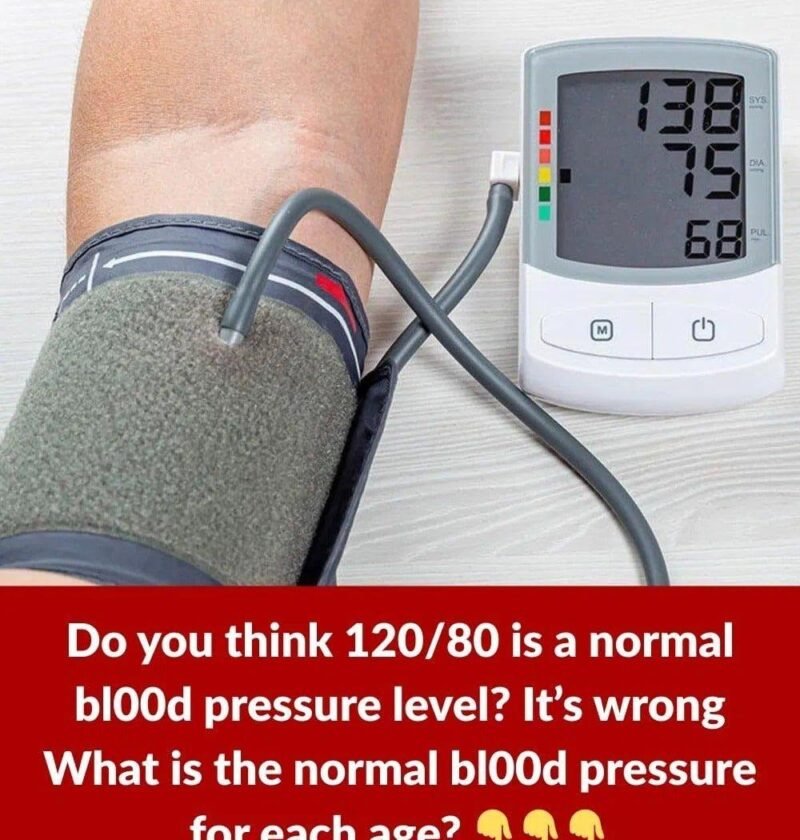
Blood pressure doesn’t have a single “normal” value for each age. For adults, the usual categories are generally based on the reading itself rather than age.
Adults
| Age | Generally healthy target |
|---|---|
| 18–39 | Around <120/80 mmHg |
| 40–59 | Around <120/80 mmHg |
| 60+ | Often <130/80 mmHg, depending on health and treatment goals |
For adults, less than 120/80 mmHg is considered normal by major U.S. guidelines. Blood pressure of 130/80 or higher may indicate hypertension depending on repeated measurements and the guideline being used.
Children and teenagers
Children are different: normal blood pressure depends on age, sex, and height, so there isn’t one number that applies to every child.
Also, a single high reading doesn’t necessarily mean someone has hypertension. Blood pressure should usually be measured correctly and assessed over multiple readings.
If you tell me the person’s age and blood-pressure reading (for example, 55 years old, 145/90), I can explain whether it’s normal, elevated, or high.