9 Foot Symptoms You Should Never Ignore: What They Could Mean
Most foot problems aren’t emergencies, but certain changes can signal infection, nerve damage, circulation problems, injury, or other conditions.
-
A sudden, very swollen or painful foot — could indicate a significant injury, infection, or inflammatory condition.
-
A wound that won’t heal — particularly important in people with diabetes, because reduced circulation or nerve damage can make foot ulcers difficult to heal.
-
Redness, warmth, swelling, or pus — may indicate a bacterial infection. Rapidly spreading redness or fever requires prompt medical attention.
-
A black, blue, or unusually pale toe/foot — can indicate severely reduced blood flow and requires urgent evaluation.
-
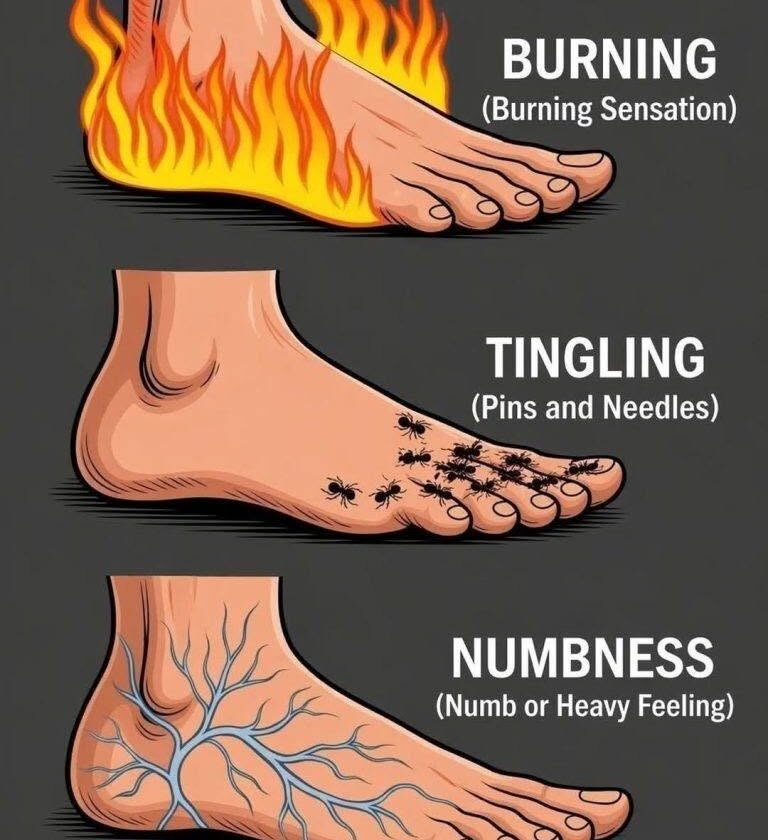
Persistent numbness or tingling — may be associated with nerve damage, including diabetic peripheral neuropathy.
-
Burning or severe unexplained foot pain — can sometimes be related to nerve problems or other medical conditions.
-
One foot suddenly becoming colder than the other — especially when accompanied by pain, numbness, or color changes, can be a sign of impaired circulation.
-
Severe swelling in one foot or leg — particularly if accompanied by calf pain, warmth, or redness, can require urgent assessment for a blood clot.
-
A new lump, rapidly changing skin lesion, or persistent unexplained discoloration — should be examined by a healthcare professional rather than assumed to be a simple callus or bruise.
🚨 Seek urgent help
A cold, pale/blue or black foot; severe sudden pain; rapidly spreading infection; or a foot wound accompanied by fever or systemic illness should be assessed urgently.
And if you have diabetes, don’t ignore even a small blister, cut, or sore that isn’t healing—early treatment can prevent serious complications.