The headline “8 Warning Signs of Stroke That May Appear One Month Before” is misleading. There isn’t a reliable set of eight symptoms that predict a stroke exactly one month in advance.
What is important is recognizing a TIA (transient ischemic attack). A TIA can cause the same sudden symptoms as a stroke, but they may disappear after minutes or hours. It is a medical emergency and can be a warning of a future stroke. (www.stroke.org)
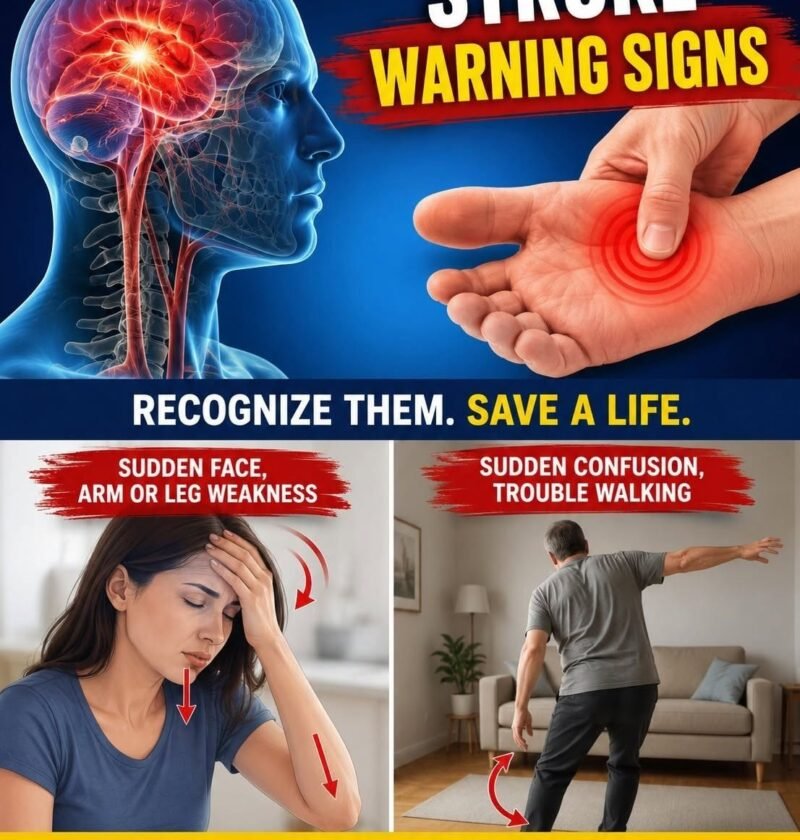
🚨 Know B.E. F.A.S.T.
- B — Balance: sudden dizziness, loss of coordination or difficulty walking
- E — Eyes: sudden blurred, double or lost vision
- F — Face: one side suddenly droops or becomes numb
- A — Arm: sudden weakness or numbness, particularly on one side
- S — Speech: sudden slurred speech or difficulty understanding/speaking
- T — Time: call emergency services immediately
Other sudden symptoms include severe unexplained headache, confusion, or weakness/numbness on one side. (www.stroke.org)
Even if the symptoms completely disappear, don’t ignore them. A TIA needs urgent assessment because the risk of a subsequent stroke can be particularly high in the days and weeks afterward. (www.stroke.org)
9 practical ways to reduce stroke risk
- Control high blood pressure — one of the most important modifiable risk factors.
- Manage diabetes and keep blood glucose under control.
- Control cholesterol, particularly LDL cholesterol.
- Don’t smoke and avoid tobacco.
- Exercise regularly and stay physically active.
- Maintain a healthy weight if possible.
- Eat a heart-healthy diet, emphasizing vegetables, fruits, whole grains, legumes, nuts and lean proteins while limiting excess salt and saturated/trans fats.
- Limit alcohol or avoid it.
- Take prescribed medications as directed and don’t stop blood-pressure, cholesterol, diabetes, antiplatelet or anticoagulant medicines without discussing it with your clinician. (www.stroke.org)
The American Stroke Association estimates that up to about 80% of strokes may be preventable through risk-factor management and healthy lifestyle choices. (www.stroke.org)
If you or someone nearby is experiencing sudden facial drooping, arm weakness, speech difficulty, vision changes, or loss of balance right now, treat it as a stroke emergency—don’t wait to see whether it improves. (www.stroke.org)