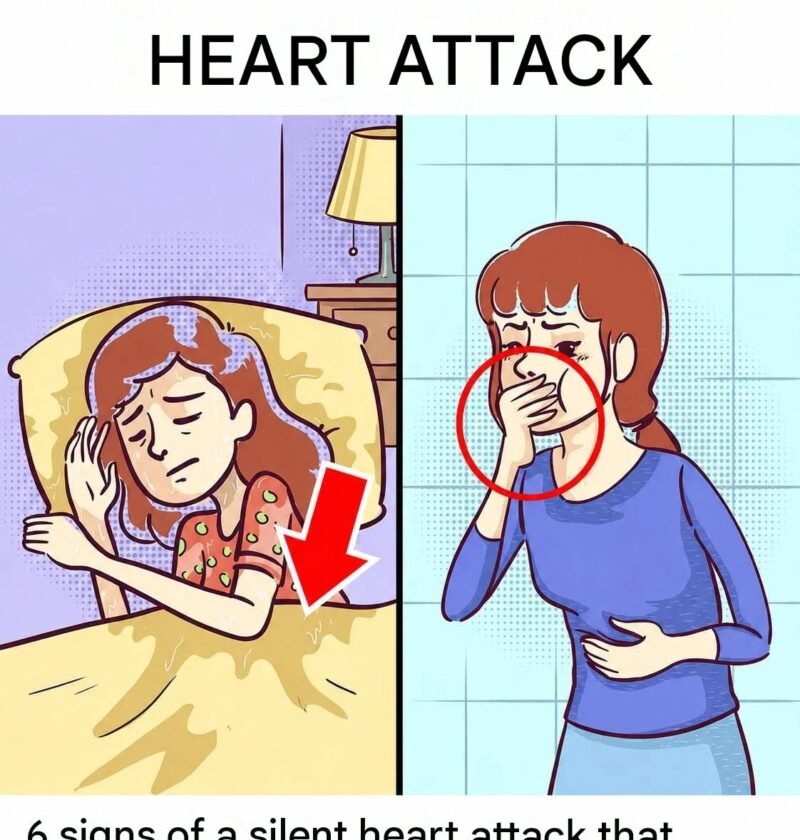
When most people picture a heart attack, they imagine the dramatic Hollywood scene: someone clutching their chest in agonizing pain, dropping to the floor, and gasping for air.
While that classic crushing chest pain happens to many, a staggering number of heart attacks—nearly half, according to cardiologists—are “silent.” Clinically known as a silent myocardial infarction (SMI), these events occur when blood flow to a portion of the heart muscle is blocked, but the symptoms are so subtle, atypical, or mild that people mistake them for everyday indigestion, fatigue, or muscle strain.
Because there is no dramatic chest clutching, people often walk around for days or weeks completely unaware they have suffered cardiac damage. Here are six still-overlooked signs of a silent heart attack that you should never ignore.
1. Unexplained, Crushing Fatigue (The “Hit by a Truck” Feeling)
We all experience exhaustion from a poor night’s sleep or a hectic week, but cardiac fatigue feels entirely different.
-
What it feels like: A sudden, profound, and heavy exhaustion that hits you out of nowhere. You might find yourself completely unable to carry out basic daily tasks—like walking up a single flight of stairs or carrying groceries—leaving you breathless and weak, as if your internal battery has been instantly disconnected.
-
Why it happens: When the heart muscle is struggling to pump blood efficiently due to a blockage, oxygen delivery to your entire body plummets, causing sudden, overwhelming exhaustion.
2. A Vague “Pressure” or Fullness in the Chest (Not Sharp Pain)
Hollywood has conditioned us to look for sharp, stabbing pain, but heart issues often communicate through pressure.
-
What it feels like: Instead of pain, you might feel a strange tightness, a heavy squeezing sensation, or a feeling like someone is sitting on your chest or wrapping a tight band around your ribs. It can also manifest as an uncomfortable fullness in the center of the chest that comes and goes.
-
Why it happens: Cardiac tissue does not have pain receptors that signal sharp cuts; instead, it signals distress through dull, visceral pressure and aching.
3. Discomfort Traveling to the Jaw, Neck, or Back
When a heart muscle is starved of oxygen, the pain signals share nerve pathways with the upper body, leading to “referred pain.”
-
What it feels like: A dull ache, tightness, or burning sensation that radiates up into your lower jaw, teeth, neck, throat, or between your shoulder blades (particularly on the left side).
-
Why it happens: Because these areas share neurological pathways with the heart, brain misinterpretation causes you to feel the distress miles away from the actual organ. Women, in particular, are much more likely to experience jaw and back discomfort during a cardiac event than classic chest pain.
4. Sudden Shortness of Breath (Air Hunger)
Finding yourself gasping for air while doing something completely effortless—like folding laundry or sitting quietly watching television—is a major red flag.
-
What it feels like: A sudden inability to catch your breath, often accompanied by a feeling of mild panic or “air hunger,” even though your lungs are completely clear.
-
Why it happens: If the heart’s left ventricle is damaged or struggling to pump, blood backs up into the lungs, creating fluid congestion and making it genuinely difficult for oxygen to transfer into your bloodstream.
5. Cold Sweats and Sudden Clamminess
Breaking out into a sudden, unexplained sweat for no apparent reason is one of the most reliable physical tells of acute physical stress.
-
What it feels like: Your skin suddenly turns cold and clammy, and you break out in a heavy, stress-induced sweat while sitting in a comfortable room, often accompanied by a feeling of unease or lightheadedness.
-
Why it happens: When the heart is under severe stress and failing to pump efficiently, the body activates its “fight or flight” sympathetic nervous system, constricting blood vessels and triggering a sudden, cold stress-sweat.
6. Upper Abdominal Discomfort or “Indigestion”
Because the heart sits directly above the stomach and shares overlapping nerve networks, cardiac distress is frequently mistaken for a bad meal or severe heartburn.
-
What it feels like: A burning sensation in the upper abdomen, nausea, a feeling of extreme bloating, or sharp digestive distress that doesn’t go away with antacids.
-
Why it happens: Lower-wall heart attacks mimic gastrointestinal distress, causing many people to pop a Tums and try to sleep it off when their heart is actually crying out for help.
When to Seek Immediate Help
While these symptoms can occasionally be caused by anxiety, acid reflux, or muscle strain, never gamble with your heart. If you experience a combination of these subtle signs—especially if they come on suddenly, occur during rest or mild exertion, and are accompanied by nausea, sweating, or lightheadedness—treat it as a medical emergency and call 911 immediately. Catching a heart attack early, silent or not, saves lives.