Here’s a clear, medically cautious version you can use:
💧 What Does the Color of Your Urine Say About Your Health?
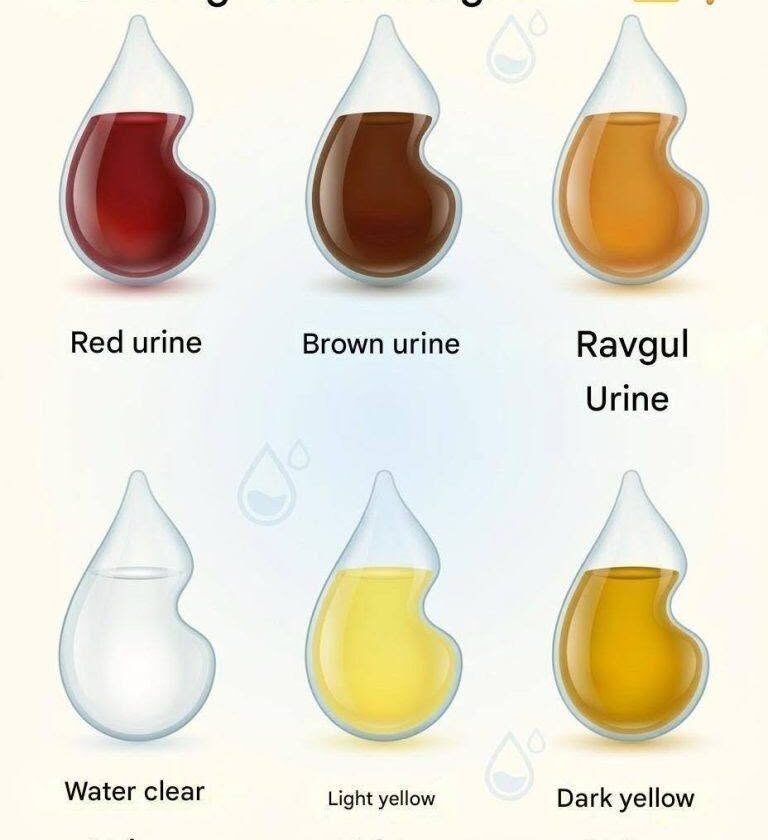
Your urine color can sometimes offer clues about hydration and certain health conditions—but color alone cannot diagnose a disease.
Here’s a simple guide:
- 🟨 Pale yellow — Usually a sign of good hydration.
- 💛 Dark yellow — Often means your urine is concentrated and you may need more fluids.
- 🟠 Orange — Can occur with dehydration or certain medications and supplements. Persistent orange urine deserves medical attention.
- 🩷 Pink or red — Sometimes caused by foods such as beets, but it can also indicate blood in the urine. Don’t ignore unexplained red or pink urine.
- 🟤 Dark brown or tea-colored — May occur with severe dehydration, certain medications, liver problems, or muscle injury and should be medically evaluated if unexplained.
- 🟢 Green — Uncommon; certain medicines, dyes, or infections can cause it.
- 🔵 Blue — Rare and can be related to medications, dyes, or unusual medical conditions.
- ☁️ Cloudy or milky — Can occur with dehydration, crystals, urinary infections, or other conditions, especially when accompanied by pain or burning.
- 🫧 Persistently very foamy urine — Occasional bubbles are normal, but persistent excessive foam can sometimes indicate protein in the urine and should be checked.
- 👃 Strong-smelling urine — Concentrated urine, certain foods, medications, or infections can change the smell.
⚠️ When to seek medical advice: Don’t ignore urine that is repeatedly red, brown, or unusually cloudy, especially if you also have pain, fever, burning when urinating, swelling, jaundice, or difficulty urinating.
💡 One important reminder: Urine color changes can be caused by harmless things such as food, vitamins, medications, and hydration. If a change persists without an obvious explanation, it’s worth getting checked rather than trying to diagnose yourself from color alone.