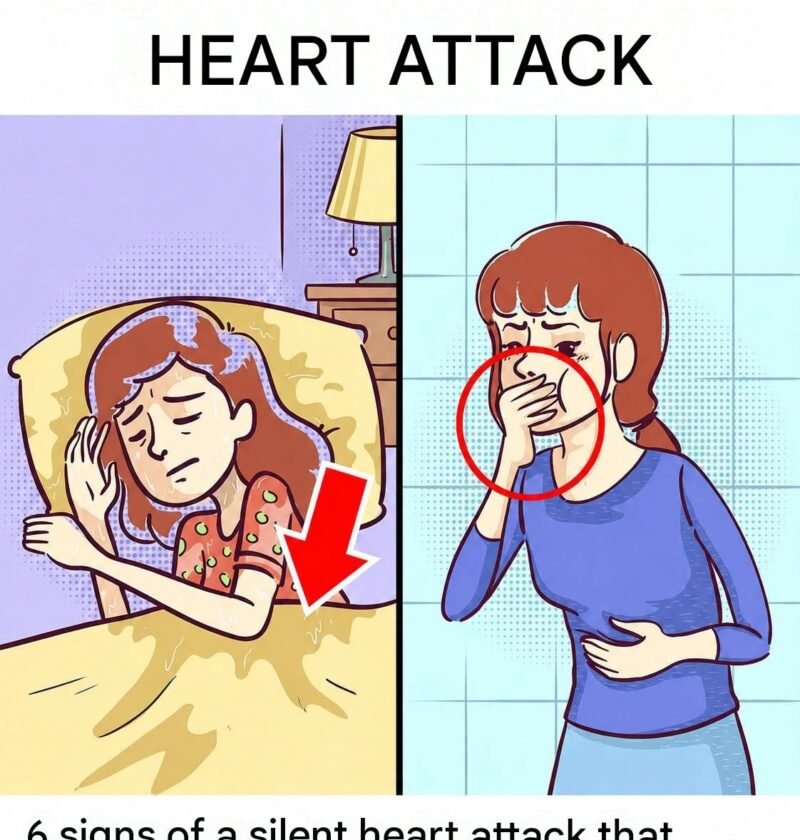
6 Commonly Overlooked Signs
-
Unexplained, crushing fatigue: Feeling suddenly exhausted after routine activities you normally handle easily—like climbing a single flight of stairs, carrying groceries, or making the bed—especially if it lasts for days.
-
Mild chest pressure, fullness, or tightness: Instead of sharp pain, it often feels like a heavy weight, squeezing, or uncomfortable fullness in the center of the chest that comes and goes.
-
Pain radiating to unexpected places: Discomfort, aching, or numbness in the jaw, neck, upper back, shoulders, or one or both arms (often the left, though not always) without an obvious injury or dental problem.
-
Shortness of breath without exertion: Feeling winded or unable to catch your breath while resting, lying flat, or doing minimal movement—sometimes happening without any chest discomfort at all.
-
Indigestion, heartburn, or nausea: A burning sensation in the upper abdomen, belching, nausea, or a sour stomach that doesn’t improve with antacids or feels slightly different from your usual acid reflux.
-
Cold sweats and sudden lightheadedness: Breaking out into a clammy, cold sweat for no clear reason, paired with dizziness, feeling faint, or an unexplained sense of anxiety or impending doom.
Who Is Most Likely to Miss the Signs?
-
People with diabetes: High blood sugar over time damages nerves (), dulling the classic chest pain warning signal.
-
Women and older adults: Both groups are statistically more likely to experience atypical symptoms—such as fatigue, shortness of breath, nausea, and back or jaw pain—rather than textbook chest pain.
-
People with high blood pressure or prior heart issues: Subtle shifts in stamina or mild pressure are often brushed off as aging or stress.
What to Do If Something Feels Off
-
Don’t wait it out: If you or someone nearby develops new, unexplained combinations of these symptoms—especially lasting more than a few minutes—seek immediate emergency medical care (in Pakistan, call 1122 for Rescue 1122).
-
How doctors catch past silent heart attacks: Many silent heart attacks are discovered weeks or months later during a routine ECG (electrocardiogram), echocardiogram, or blood test checking heart muscle proteins (troponin) if evaluated shortly after the episode.