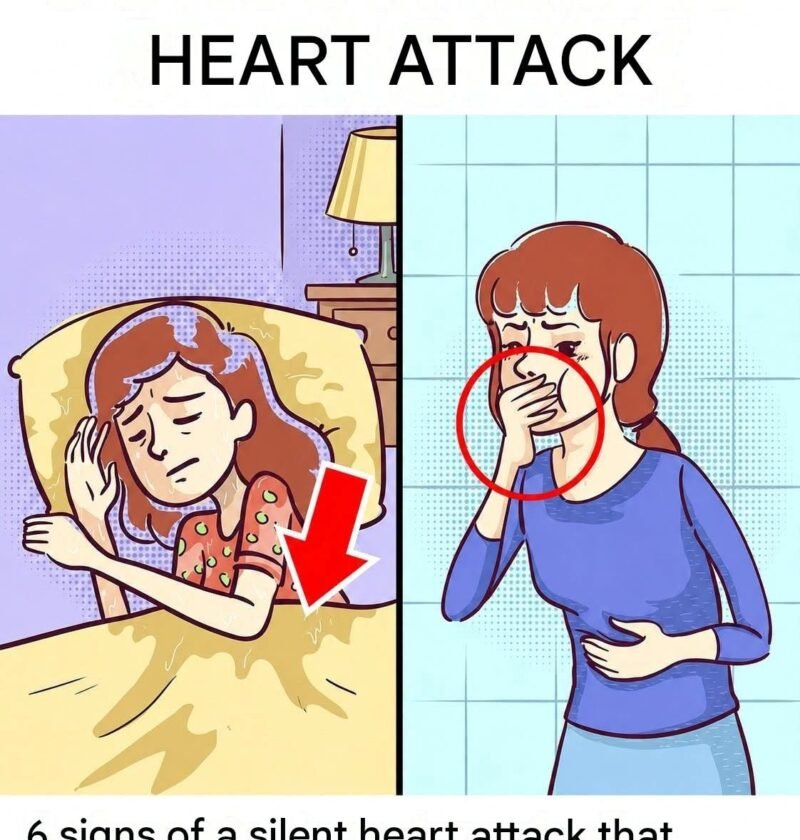
A silent heart attack (medically known as a silent myocardial infarction) occurs when blood flow to a section of the heart muscle is blocked, damaging the tissue—just like a classic heart attack—but without the dramatic, crushing chest pain people expect. Because the symptoms are mild, brief, or easily mistaken for everyday nuisances, many people only discover they had one weeks or months later during a routine electrocardiogram (ECG) or echocardiogram.
Silent heart attacks are particularly common in women, older adults, and people with diabetes (where nerve damage can blunt pain signals).
1. Persistent Indigestion, Heartburn, or Nausea
A feeling of fullness, acid reflux, mild stomach cramping, or sudden nausea—especially when it isn’t tied to a heavy or spicy meal—is one of the most frequently dismissed signs. Because the heart and upper digestive tract share nerve pathways, reduced blood flow to the bottom wall of the heart often mimics routine indigestion or a mild stomach bug.
2. Unexplained, Overwhelming Fatigue
Feeling suddenly exhausted after tasks that normally require minimal effort—such as making the bed, walking to the mailbox, or carrying groceries—can signal that your heart is struggling to pump blood effectively. Unlike normal tiredness, this fatigue often lingers for days and doesn’t improve with a good night’s sleep.
3. Mild Chest Pressure, Fullness, or “Squeezing”
Instead of sharp, unbearable pain, a silent heart attack often feels like an uncomfortable pressure, tightness, heaviness, or mild aching in the center of the chest. It may come and go over several hours or days, leading many people to blame muscle strain or stress.
4. Discomfort Radiating to the Jaw, Neck, Upper Back, or Arms
Heart-related pain doesn’t always stay in the chest. Subtle aching, tightness, or numbness can appear in:
-
The lower jaw or teeth (often mistaken for a dental issue)
-
The neck or throat (feeling like a tight band or lump)
-
Between the shoulder blades or in the upper back
-
One or both arms (especially the left arm) or wrists
5. Shortness of Breath Without Exertion
Suddenly feeling winded while sitting still, lying flat in bed, or walking short distances—even without chest discomfort—can indicate reduced heart function and fluid backing up into the lungs.
6. Cold Sweats, Lightheadedness, or Dizziness
Breaking out in a sudden, clammy sweat when the room isn’t warm, or feeling abruptly dizzy, faint, or unusually anxious (“a sense of impending doom”), occurs when the nervous system reacts to sudden cardiac stress and a drop in blood pressure.
Why Recognizing These Signs Matters
Even without intense pain, a silent heart attack leaves scar tissue on the heart muscle, increasing the risk of future, potentially fatal heart attacks and heart failure.
When to Act: If you experience a combination of these unusual symptoms—especially if they come on suddenly, worsen with mild activity, or occur alongside risk factors like high blood pressure, high cholesterol, diabetes, smoking, or a family history of heart disease—seek urgent medical evaluation right away.