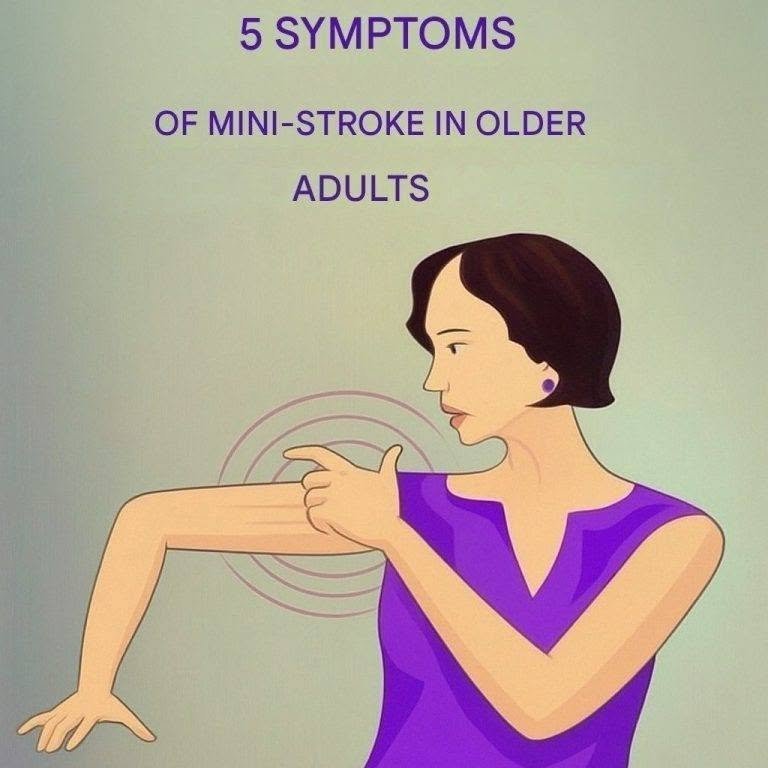
5 Symptoms of a Mini-Stroke in Seniors That Shouldn’t Be Ignored
A mini-stroke, medically called a transient ischemic attack (TIA), is a warning stroke. Its symptoms can disappear within minutes or hours, but that does not make it harmless. You cannot reliably distinguish a TIA from a full stroke while symptoms are occurring, so emergency evaluation is needed—even if the person seems completely normal afterward.
W
www.stroke.org
+1
1. Sudden weakness or numbness
One side of the face, arm, or leg may suddenly become weak, numb, or difficult to move. Ask the person to raise both arms; one arm drifting downward is a warning sign.
W
www.stroke.org
2. Sudden difficulty speaking
The person may suddenly slur their words, have trouble finding words, or have difficulty understanding what others are saying. Even a brief episode deserves urgent attention.
W
www.stroke.org
3. Sudden vision problems
A TIA can cause sudden loss of vision, blurred vision, or double vision, sometimes affecting one eye.
W
www.stroke.org
+1
4. Sudden loss of balance or coordination
Unexpected dizziness, trouble walking, loss of coordination, or difficulty maintaining balance can be a stroke warning sign, particularly when it begins suddenly.
W
www.stroke.org
5. Sudden, unexplained severe headache
A sudden severe headache without an obvious cause can occur with stroke and should not simply be attributed to aging or a routine headache—especially when accompanied by other neurological symptoms.
W
www.stroke.org
+1
🚨 The most important thing to remember: B.E. F.A.S.T.
B — Balance loss
E — Eye/vision changes
F — Face drooping
A — Arm weakness
S — Speech difficulty
T — Time to call emergency services
If any of these symptoms start suddenly, call your local emergency service immediately, even if they disappear. Note the time the symptoms began. Rapid assessment is important because a TIA can precede a more serious stroke.
W
www.stroke.org
+1
Don’t wait to see whether the symptoms return, and don’t let the fact that they’re gone reassure you. A TIA requires medical assessment to determine its cause and reduce the risk of a subsequent stroke.
W
www.stroke.org
W
Sources