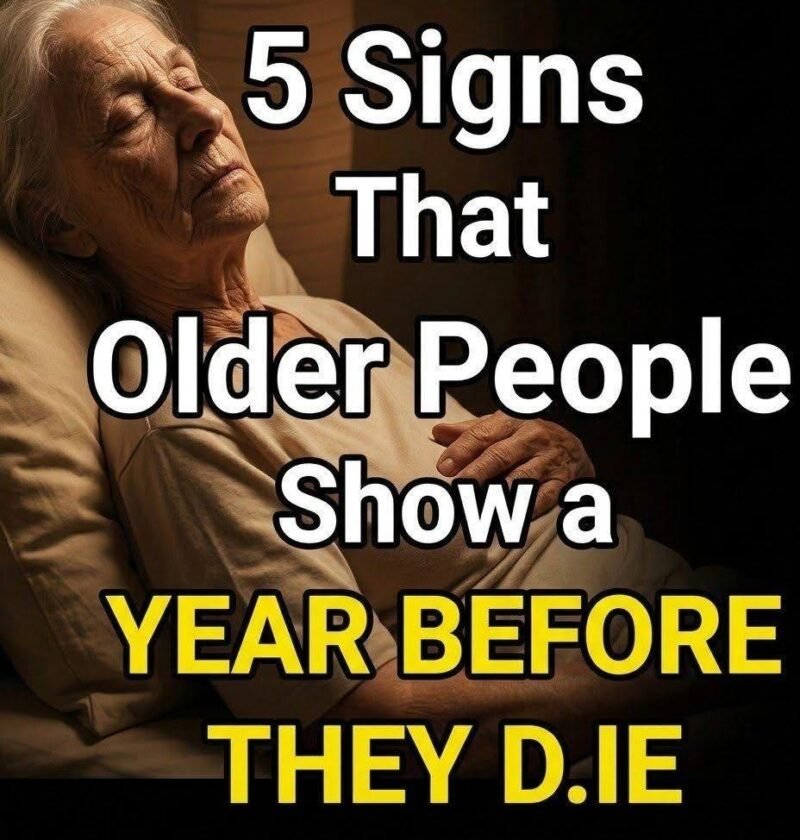
If you’re referring to that claim, it’s important not to treat these as reliable signs that someone has exactly one year left. There’s no fixed set of subtle symptoms that can predict a person’s remaining lifespan.
In an elderly person, changes that can occur as someone approaches the final months or weeks of life may include:
- Increasing weakness and fatigue — needing much more help with ordinary activities.
- Eating and drinking less — appetite and thirst often decline as the body slows down.
- Sleeping much more — spending progressively more time asleep or difficult to wake.
- Reduced mobility and social interaction — becoming less interested in conversation or activities.
- Changes in breathing or circulation — particularly in the final days, breathing patterns, skin temperature/color, and alertness can change.
These signs can also occur with treatable problems, such as infection, dehydration, medication effects, or heart/lung disease. If someone has new or rapidly worsening symptoms, a healthcare professional should assess them rather than assuming they are dying.
If you want, I can also explain the specific signs that tend to appear in the last few weeks vs. the last few days of life.