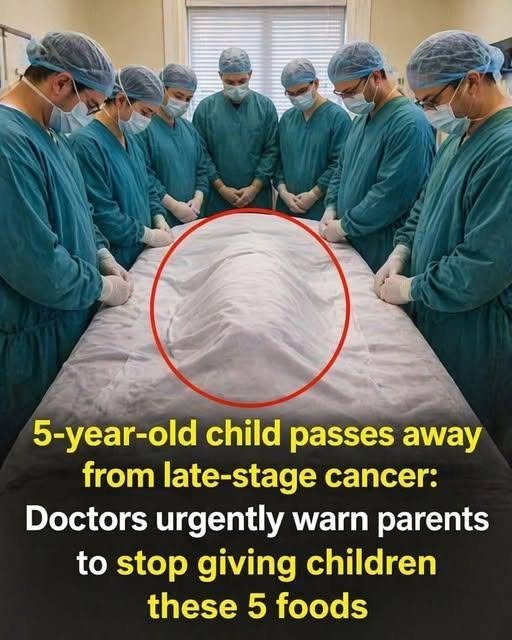
That headline is too absolute. There isn’t a universal list of five foods that all doctors would tell every parent to completely stop giving children. What matters is the child’s age, allergies, portion size, nutritional needs, and how the food is prepared.
Foods that parents should be particularly careful about include:
-
Whole nuts and similar hard foods — a significant choking hazard for young children. Use age-appropriate forms such as finely ground or smooth nut butter.
-
Unpasteurized milk, juice, or other dairy products — can carry harmful bacteria.
-
Raw or undercooked eggs, meat, and seafood — increased risk of foodborne illness.
-
High-mercury fish — some large predatory fish can contain enough mercury to be a concern for children.
-
Highly processed foods and sugary drinks — these don’t need to be completely forbidden, but frequent consumption can displace nutritious foods and contribute excessive added sugar, sodium, and calories.
One especially important age-related warning
Honey should not be given to babies under 12 months, because of the risk of infant botulism. After age 1, honey is generally safe.
So I would be skeptical of an article claiming that five ordinary foods are universally “dangerous” for children. Age matters enormously—a food that’s unsafe for a 9-month-old may be perfectly reasonable for a 9-year-old.