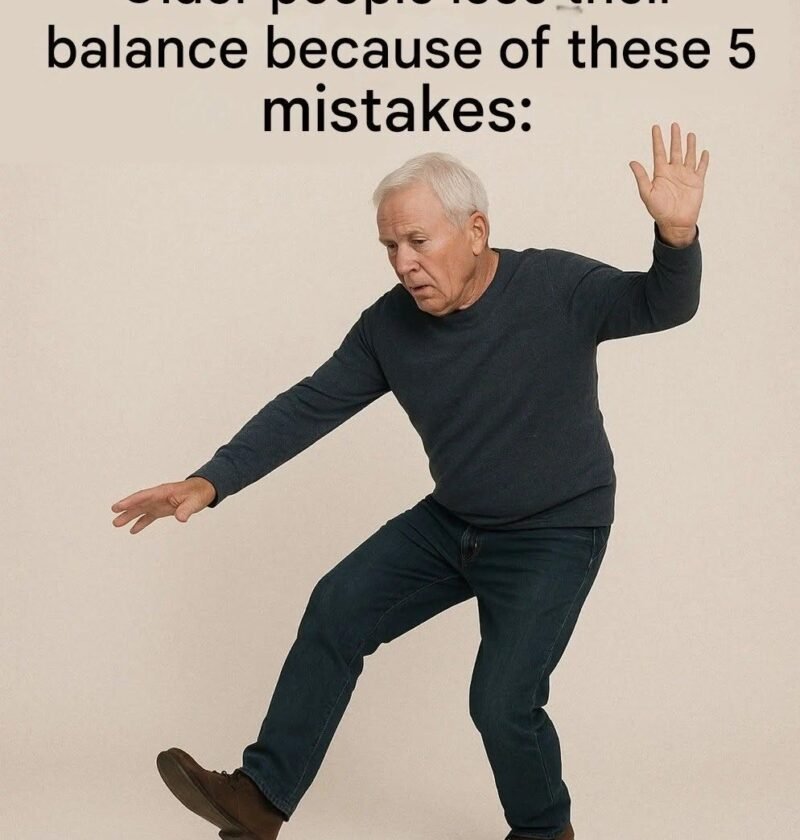
5 Common Mistakes That Can Increase Fall Risk in Older Adults
Balance problems aren’t simply an inevitable part of aging. Some everyday habits can make falls more likely, and many risk factors can be addressed.
-
Wearing unsafe footwear 👟
Loose slippers, slippery soles, or shoes without adequate support can reduce stability. Well-fitting shoes with good traction are generally safer. -
Relying on furniture for support
Using chairs, tables, or countertops to steady yourself can be risky because they may move or tip. If you need assistance walking, ask a healthcare professional about an appropriate walking aid. -
Ignoring vision problems 👓
Poor vision makes it harder to detect obstacles, steps, and changes in flooring. Regular eye examinations and appropriate corrective lenses can help. -
Getting up too quickly
Standing suddenly can cause lightheadedness from a drop in blood pressure (orthostatic hypotension), increasing fall risk. Sit at the edge of the bed for a moment and stand slowly. -
Not exercising balance and strength
Avoiding physical activity can gradually reduce leg strength and balance. Appropriate exercises—such as strength training, walking, tai chi, or supervised balance exercises—can help maintain mobility.
Other things worth checking
Medication side effects, dizziness, neuropathy, inner-ear disorders, low blood pressure, and neurological conditions can also affect balance. If someone has new or rapidly worsening balance problems, they should be medically evaluated rather than simply assuming it’s age-related.
Sudden loss of balance accompanied by facial drooping, one-sided weakness, speech difficulty, or vision changes can be a stroke warning sign—seek emergency care immediately.